
Searching for a blocked drain specialist in Blackpool gets you a long list of results — most of them national companies with regional call centres that will dispatch whoever is available from wherever happens to be convenient for them. What it doesn’t easily surface is a genuinely local specialist who knows Central Blackpool’s Victorian drain layouts, understands why South Shore properties near the beach get sand in their drain pipes, or recognises the shared rear yard drain patterns specific to Layton’s terraced streets.
That’s what this page is. A neighbourhood-by-neighbourhood breakdown of who we are, what we know about your specific area, and why local knowledge makes a measurable difference when your drain blocks.
Specialised Solutions for Common Blackpool Drainage Issues (Sand, Old Clay Pipes)
Blackpool’s four central FY postcodes each have specific drainage characteristics that shape the type and frequency of blockages we deal with. Understanding these characteristics before we arrive — rather than working them out on site — is what makes the difference between first-visit resolution and a wasted call-out.
High density of converted commercial premises, hotels, guesthouses and holiday lets above Victorian residential infrastructure. Complex multi-connection drain runs, FOG build-up from commercial kitchens and sand ingress from seafront proximity.
Grease blockages, sand ingress, shared sewer confusion, commercial drain overload
Mix of original Victorian terraces and inter-war semi-detached properties. High proportion of HMOs and converted guest houses with complex drainage layouts. Clifftop proximity means some properties have drainage affected by ground movement.
Root ingress, displaced joints, HMO drainage overload, complex converted property layouts
Dense Victorian terraced housing with original clay drain systems and established street tree planting — one of the highest root ingress risk areas in Blackpool. Shared rear yard drain runs are the norm rather than the exception.
Root ingress, fat/scale build-up, shared drain confusion, recurring blockages
Mix of Victorian terraces and inter-war properties close to Blackpool Pleasure Beach and the beach. Sand ingress is a specific and recurring problem in streets closest to the seafront. High density of holiday lets with peak-season drainage loading.
Sand ingress, holiday let overload, gully blockages, displaced joints
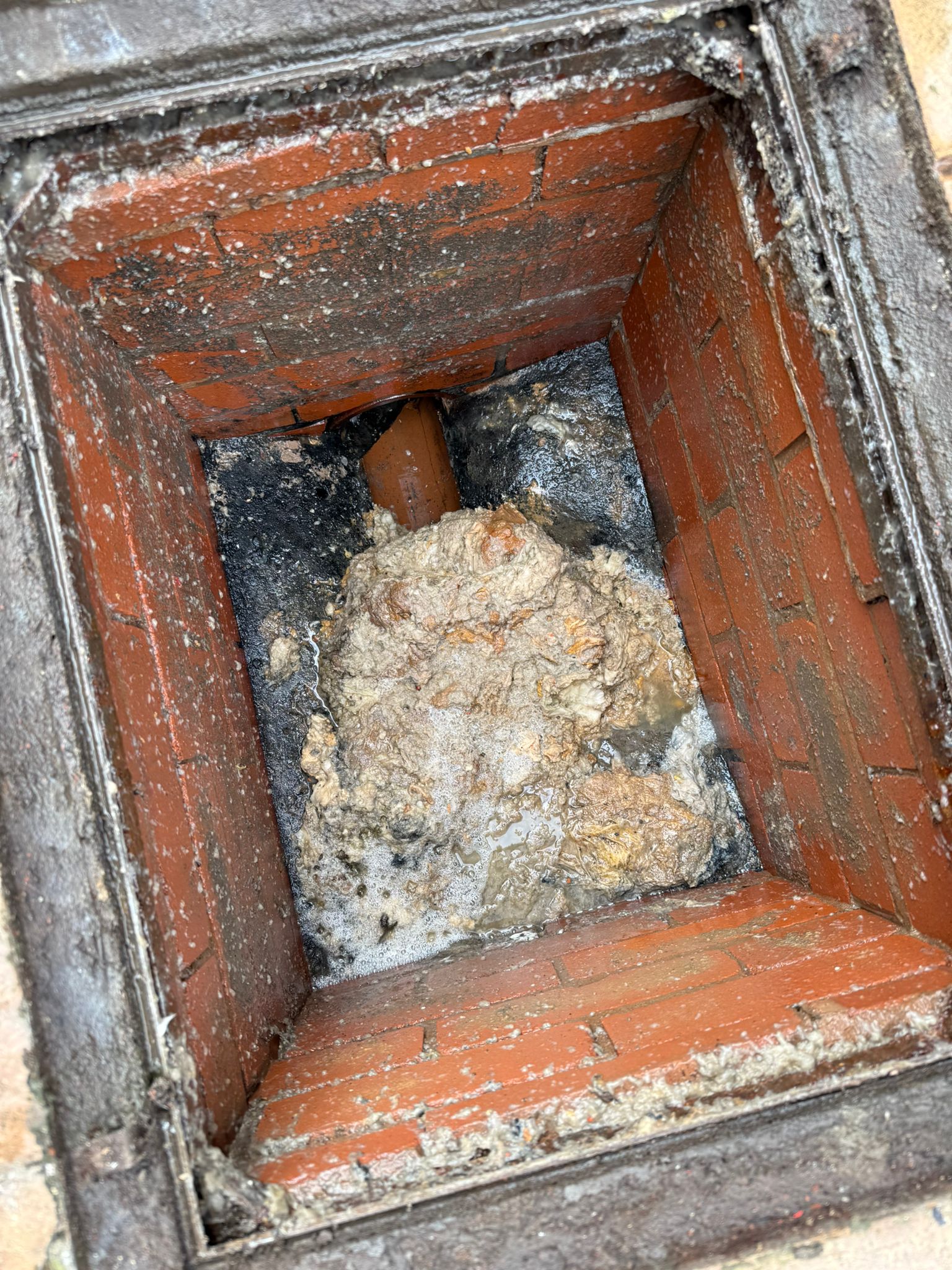
Local experience means arriving knowing what you’re likely to find — faster diagnosis, better outcomes and first-visit resolution across FY1 to FY4.
Sand ingress — Blackpool’s unique drainage challenge
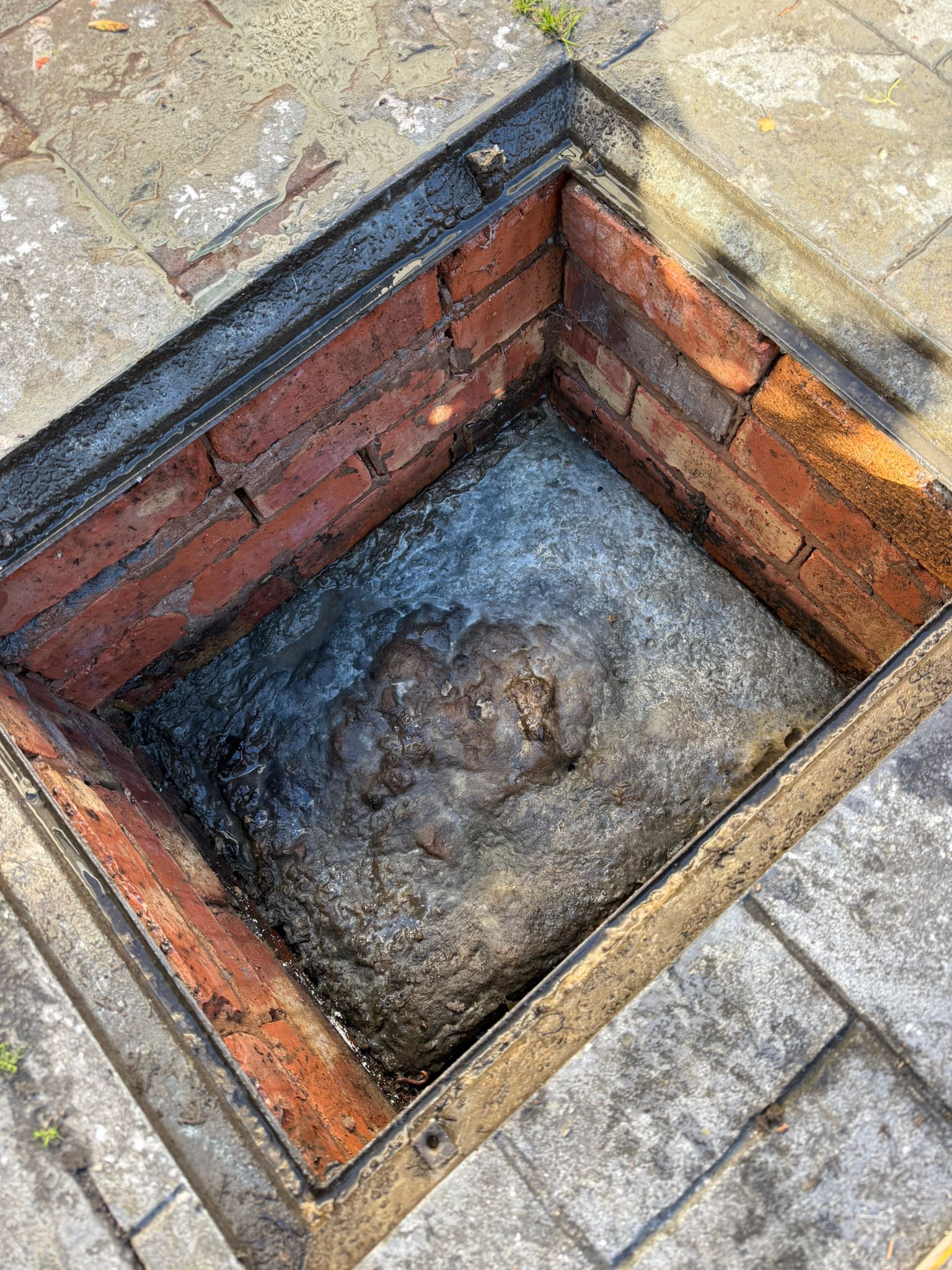
Of all the specific drainage problems across Blackpool’s central postcodes, sand ingress is the one most likely to catch out a non-local contractor. It is almost entirely absent from drainage textbooks and national training programmes — because it is a problem specific to coastal towns with beach sand that migrates into the drainage infrastructure through cracks, open joints and damaged gully pots.
Sand-blocked drains behave very differently to organic blockages from fat, grease or root masses. Standard high-pressure jetting that would clear a grease blockage in minutes can compact sand further down the pipe rather than removing it. The technique required is lower-pressure, higher-volume water flow that suspends the sand and carries it through the system — combined with thorough post-clearance CCTV to confirm no sand remains in low-gradient sections where it can settle and recompact.
Old clay pipes — the common thread across FY1 to FY4
Whatever the specific postcode, one factor is consistent across virtually all of Blackpool’s central four postcodes — original Victorian clay drainage infrastructure that is between 100 and 140 years old. These systems share common vulnerabilities regardless of which FY postcode they sit beneath:
The mortar sealing pipe sections together weakens over a century, creating gaps that admit roots, sand and ground water — and allow wastewater to escape into the surrounding ground.
The rough internal surface of older clay pipe accumulates fat, grease and limescale deposits faster than modern smooth-bore plastic. A pipe that was 100mm bore when installed can be significantly narrower after decades of use.
Clay becomes more brittle with age and is susceptible to cracking from ground movement, vehicle loading on rear alleys and frost heave over winter — particularly in low-lying FY4 streets.
Extensions, bathroom additions and kitchen refits over a century of ownership have frequently resulted in non-compliant drain connections, misaligned junctions and abandoned pipe sections that complicate current drainage behaviour.
Servicing Central Blackpool, South Shore, Layton, and Bispham (FY1–FY4)
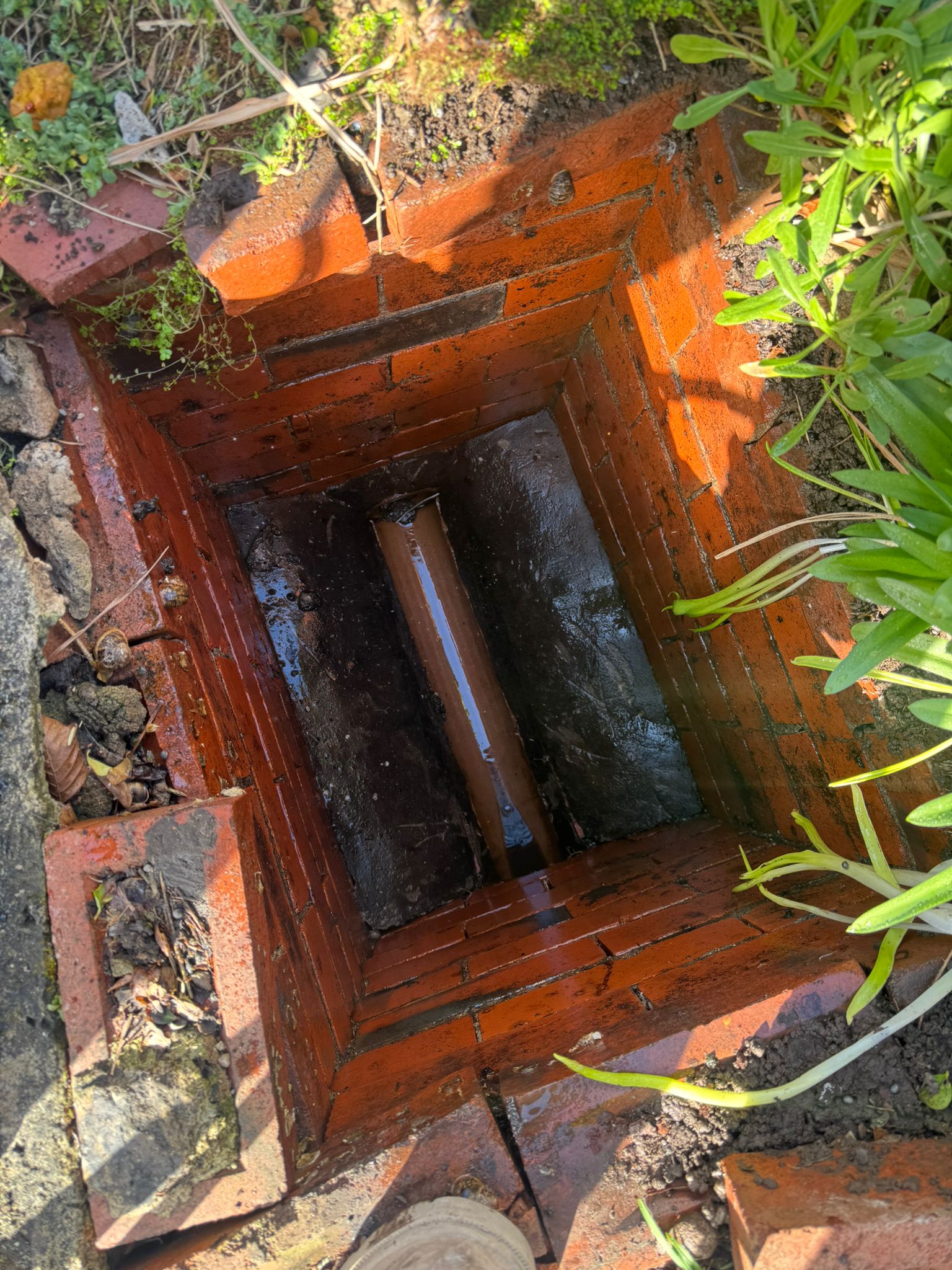
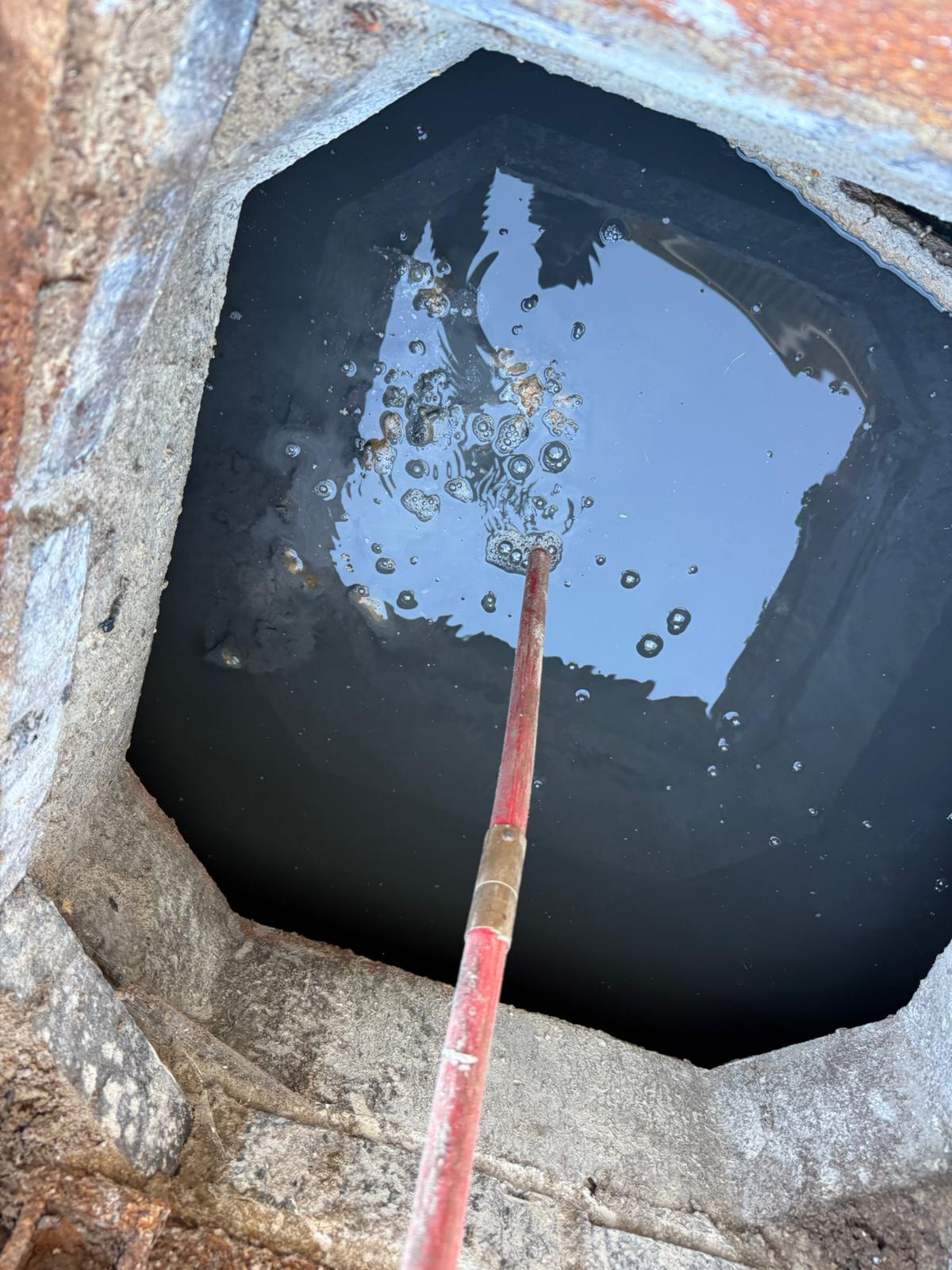
Blocked drains across FY1 to FY4 — each postcode has specific characteristics our local engineers know before they arrive.
Central Blackpool — FY1
FY1 is the most commercially complex drainage area in the town. The density of hospitality, retail and entertainment businesses above an infrastructure built for Victorian residential use creates constant pressure on the drain system. Hotels, guesthouses, restaurants and takeaways discharging high volumes of fat, grease and food waste into pipes designed for household use are among the most frequent sources of fat and grease blockages we attend in Blackpool.
The proximity to the seafront also makes FY1 one of the highest-risk areas for sand ingress through damaged surface water gullies — particularly in the streets running east from the promenade where sand is carried inland by wind and washed into gully pots during rain events.
For commercial premises in FY1, our commercial drainage service includes planned preventive maintenance — annual jetting and CCTV survey — to keep high-usage drain systems clear before a blockage becomes a trading emergency.
North Shore and Bispham — FY2
FY2 presents a different drainage profile to the town centre. The Victorian terraced streets of North Shore and the inter-war semis of Bispham have been heavily converted to HMOs, student accommodation and holiday lets over the past three decades. These conversions have frequently added bathrooms, kitchens and additional waste connections to drain systems never designed for that level of occupancy.
The result is drain systems in FY2 that are routinely overloaded — particularly during the summer tourist season and university term time. Root ingress is also common in FY2’s older terraced streets, where established garden planting and street trees have been exploiting clay pipe joint failures for decades. Our specialist root removal service is one of the most frequently used across FY2 properties.
Layton and Stanley Park — FY3
FY3 — covering Layton, parts of Marton and the area around Stanley Park — is the postcode we attend most frequently for recurring blockages that other contractors have failed to permanently resolve. The dense Victorian terrace grid of Layton, combined with mature street trees planted in the 1920s and 1930s, creates near-ideal conditions for root ingress. The trees are established, the clay pipe joints are 100 years old, and the two meet regularly in the drain runs beneath rear yards and back alleys.
Layton’s terraced streets also have a particularly complex pattern of shared drain runs — with multiple properties connecting to communal lateral drains before reaching the public sewer. Identifying where private drain responsibility ends and United Utilities’ responsibility begins requires specific knowledge of individual street drainage layouts that we have built up through years of working in the area. Our blog on drain responsibility boundaries covers this in detail.
South Shore and Squires Gate — FY4
FY4 sits at the southern end of Blackpool, running from Waterloo Road down to Squires Gate. The mix of Victorian terraces closer to the town and inter-war properties further south creates a varied drainage landscape. Sand ingress is the most distinctive FY4 drainage problem — properties in streets running off the promenade south of Blackpool Pleasure Beach are particularly susceptible to sand entering damaged gully pots and lateral drain pipes during wet and windy weather.
FY4 also has a high density of holiday let properties managed by absentee owners — a combination that means drainage problems can go unnoticed for extended periods before becoming serious. For holiday let owners, our CCTV baseline survey at the start of the season provides documented evidence of drain condition that protects against end-of-season guest damage claims involving drainage.
01253 Local Authority: Validating Your Commercial Location Presence
When you search for “blocked drains near me” or “drainage company Blackpool” and a result appears with a 01253 phone number, that’s not a coincidence — it’s a signal. The 01253 area code is Blackpool’s local dialling code, covering all central FY postcodes. For Google, it’s one of the clearest indicators that a business is genuinely local rather than a national company masquerading as one with a call centre number.
What genuine local presence means in practice
The difference between a genuinely local drainage company and a national company operating locally isn’t just about response time — though that matters. It’s about accumulated knowledge that cannot be replicated by a contractor who visits Blackpool occasionally and refers to mapping software for everything else.
- Knowing which streets across the Fylde Coast suffer structural anomalies due to historic water tables and sand migrations.
- Understanding exactly where private structural boundaries end and public utility responsibility begins in complicated back-alley terrace rows.
- Arriving with specialized jetting heads designed specifically to extract impacted coastal sediment rather than push it further down a clay pipe line.
Direct Accountability to the Fylde Coast
Our commitment to validating our local physical presence across the Fylde Coast means you get an engineer equipped for Blackpool’s structural realities. Whether that means deploying specialised low-pressure high-volume flushing tools for sand or heavy-duty mechanical cutters for clay pipe roots, we arrive ready for the job. You can view our comprehensive range of drainage services to see how we handle everything from standard clearances to complex structural fixes.
Got a Blocked Drain in FY1, FY2, FY3, or FY4?
Don’t gamble with national call centres and outsourced subcontractors. Get a genuine local specialist out to diagnose, clear, and validate your drainage issues today with a free CCTV survey included in every single clearance job.
Call 07903 021120 Book Online 07903 021120