
Outside Drain Blocked with Fat? How to Clear It Safely
It usually starts with a subtle, sour odour drifting across your garden path or backyard. Then, you notice the water from your kitchen sink or washing machine isn’t draining away cleanly—it’s bubbling up out of the external gully grate, surrounded by an unsightly, pale white crust. If you are dealing with an outside drain blocked with fat, oil, and grease (known in the drainage industry as FOG), you are dealing with one of the most stubborn and common residential plumbing blockages.
Across Blackpool, Bispham, and Poulton-le-Fylde, our engineering teams see this issue daily. Whether it is a traditional Victorian terrace brick gully or a modern plastic inspection chamber, fat blockages require specific clearance techniques. Traditional chemical unblockers will not cut it when fat has solidified into a rock-hard mass beneath your garden flooring.
Why Fat Blockages Are Unique (The “Fatberg” Effect)
When warm cooking fat, meat drippings, or oils are washed down the kitchen sink, they look completely harmless as a liquid. However, the moment that liquid hits the freezing cold subterranean temperatures of your clay or PVC outside pipes, it cools down rapidly and undergoes a chemical transition called saponification.
The liquid turns into a dense, solid, candle-wax-like structural plug. As more grease is poured down over weeks and months, it acts like glue, trapping hair, food particles, and wet wipes. Eventually, this builds into a dense mass that completely seals off the pipe diameter, forcing grey water to back up out of your external drainage gullies.
Step-by-Step Guide to Clearing Light Fat Deposits Yourself
If the blockage is shallow and has only just started to back up, you can attempt to break down the grease crust using items found around the house before calling in heavy mechanical plant machinery.
| Method Attempted | When to Use It | The Limitation / Risk |
|---|---|---|
| Boiling Water & Detergent | Minor, recent kitchen sink slowdowns. | Cannot melt dense fat masses located more than 2 metres underground. |
| Manual Rodding | When you can physically reach the structural block. | Can accidentally compact the fat tighter if the wrong attachment is used. |
| High-Pressure Water Jetting | Severe, deep, or completely solid fatbergs. | Requires specialist machinery to safely blast grease off pipe walls. |
When Private Fat Blockages Require Commercial Intervention
If you have spent hours pushing rods down your outside gully and the water level still refuses to budge, the fat has solidified deep inside your private drainage lateral line. At this stage, manual force will only compact the grease tighter against the pipe walls. If the backup begins affecting toilets or other primary lines, arranging a prompt drain unblocking in Blackpool becomes essential to prevent waste flooding.
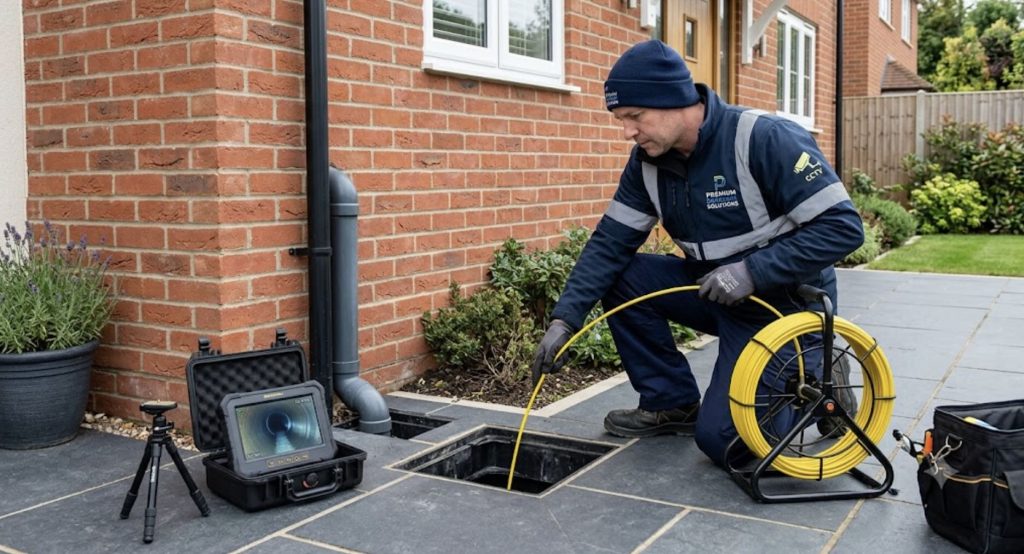
Professional drainage engineers use High-Pressure Water Jetting (HPWJ) to resolve deep fat issues cleanly. This involves feeding a specialized hose with a rotating laser-cut forward-and-rear facing nozzle down the drain. Operating at pressures exceeding 3,000 PSI, the high-pressure water acts like a mechanical knife, cleanly shaving the congealed fat and hardened scale off the internal brick or plastic pipe walls and flushing the line pristine clean without damaging the structure. For recurring issues, engineers can run a structural CCTV drain survey in Blackpool to verify if internal pipeline defects are catching grease.
Professional High-Pressure Fatberg Clearance across Blackpool
Don’t battle a foul-smelling, grease-choked gully alone. Our local independent Blackpool team carries heavy-duty on-board water jetting equipment to obliterate stubborn fat blockages instantly, restoring perfect flow to your property with fixed, transparent pricing.
Call Our Local Dispatch Team: 07903 021120
Local Base: 99 Breck Road, Poulton-le-Fylde, FY6 7AN
Book an Urgent Jetting Clearance: Arrange an Outside Drain Clearance