
A drain failure in a business premises is a very different problem to a blocked drain at home. It can close a kitchen, trigger a food hygiene inspection, flood a retail floor or bring a hotel to a standstill — all within hours of the first sign of a problem. Yet the majority of Blackpool businesses operating from older town centre premises have never had their drain system properly surveyed or documented.
For businesses in central Blackpool’s FY1 and FY2 postcodes — where Victorian commercial buildings sit above drainage infrastructure that is well over a century old — this is a significant operational risk. Here’s what a commercial CCTV drain survey covers, why proactive maintenance is essential for business continuity, and how structural compliance reporting protects your premises from regulatory exposure.
Why Proactive Maintenance Is Essential for Business Continuity (Food & Retail Focus)
Residential drains can often tolerate a slow build-up before becoming an emergency. Commercial drains — particularly in food service, hospitality and high-footfall retail — cannot. The volume of water, fat, grease and waste passing through a busy commercial kitchen or public toilet block in a single trading day is orders of magnitude greater than a domestic system. The margin between a functioning drain and a closed kitchen is measured in weeks, not months.
The business sectors most at risk in Blackpool
High volumes of cooking fat and food debris entering drain systems daily. Fat solidifies in older clay pipes fast, forming grease sleeves that cause complete blockages with little warning.
Multi-floor drainage serving dozens of bathrooms simultaneously. Shared drain runs in converted Victorian properties are among the most complex and failure-prone systems we survey.
High beer and waste volumes combined with FOG (fat, oil and grease) from bar snacks and cleaning. Cellar drainage and external gully drain blockages are particularly common.
Often overlooked — but retail units with staff toilets, cleaning facilities and food preparation areas all have drainage that requires maintenance. Shared drain runs in older retail blocks compound the risk.
Non-flushable items and specialist waste materials cause frequent blockages. Regulatory inspection requires drainage to be maintained to a high standard — documented maintenance records are essential.
High-turnover occupancy creates peak loading on older drain systems. Short-let holiday accommodation in Blackpool’s town centre is particularly susceptible to rapid blockage build-up between changeovers.
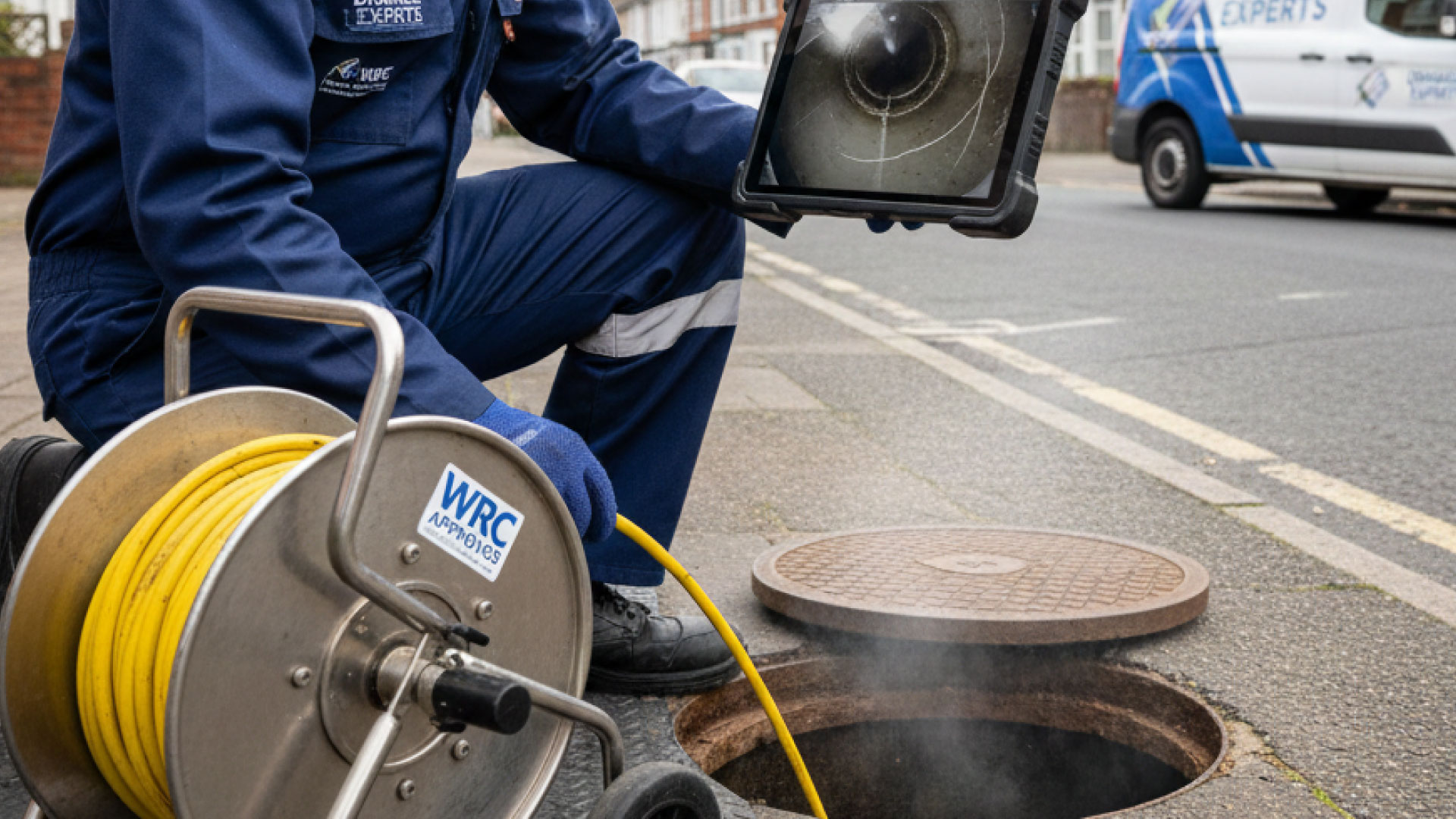
Live commercial CCTV drain survey — every section of pipe inspected, graded and documented in the structural report.
Food hygiene compliance and drain maintenance
For any business handling food — from a town centre café to a large hotel kitchen — drain maintenance is directly tied to regulatory compliance. The Food Standards Agency requires food businesses to maintain drainage in a clean, hygienic and functional condition under Regulation (EC) No 852/2004 on the hygiene of foodstuffs. A blocked or poorly maintained drain in a food preparation area is classified as a food safety hazard.
During a Food Hygiene Rating Scheme inspection by Blackpool Council’s environmental health team, a drain that is slow, malodorous or showing evidence of past blockages will be noted as a hygiene concern — potentially affecting your rating. A documented maintenance programme with annual CCTV survey records demonstrates proactive compliance and significantly strengthens your position during inspections.
The cost of reactive vs proactive drainage management
Emergency commercial callouts cost more than planned maintenance — typically significantly more when you factor in out-of-hours rates, business disruption and the risk of regulatory consequences. Our commercial drainage maintenance programme provides planned preventive jetting and annual CCTV surveys on a fixed-fee basis — predictable maintenance costs rather than unpredictable emergency expenses.
Build-Over Surveys & Asset Mapping for Expansion Projects
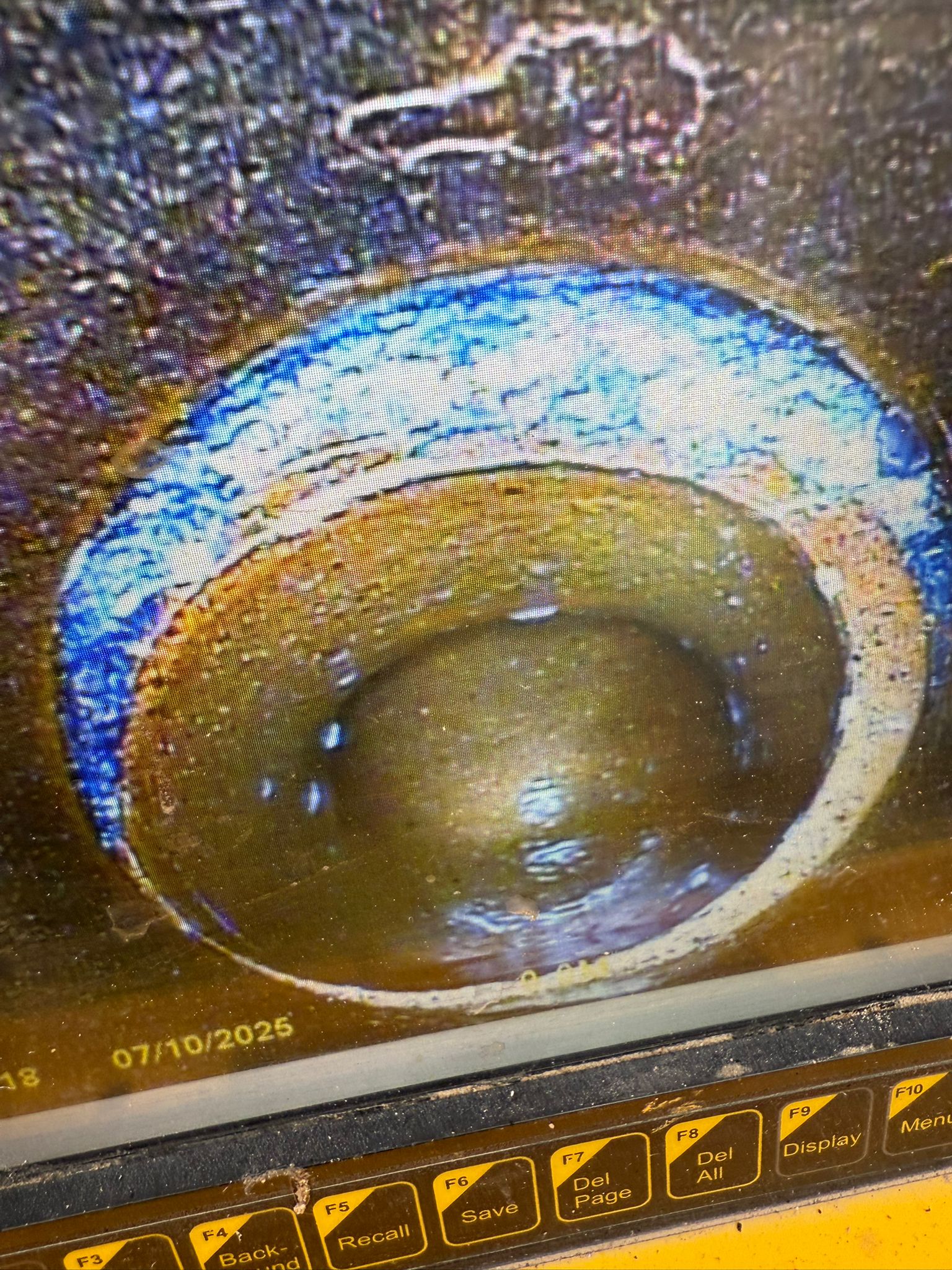
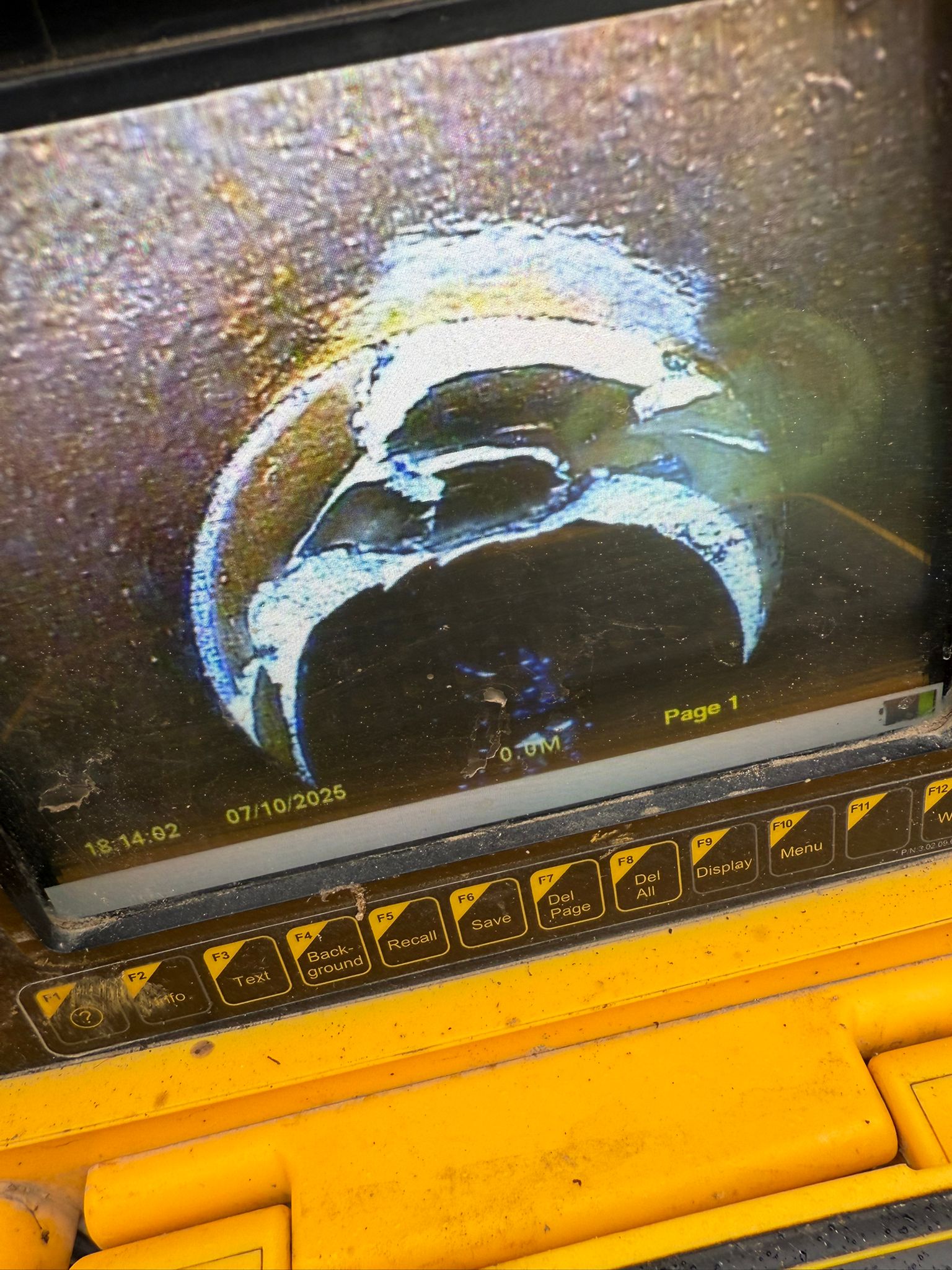
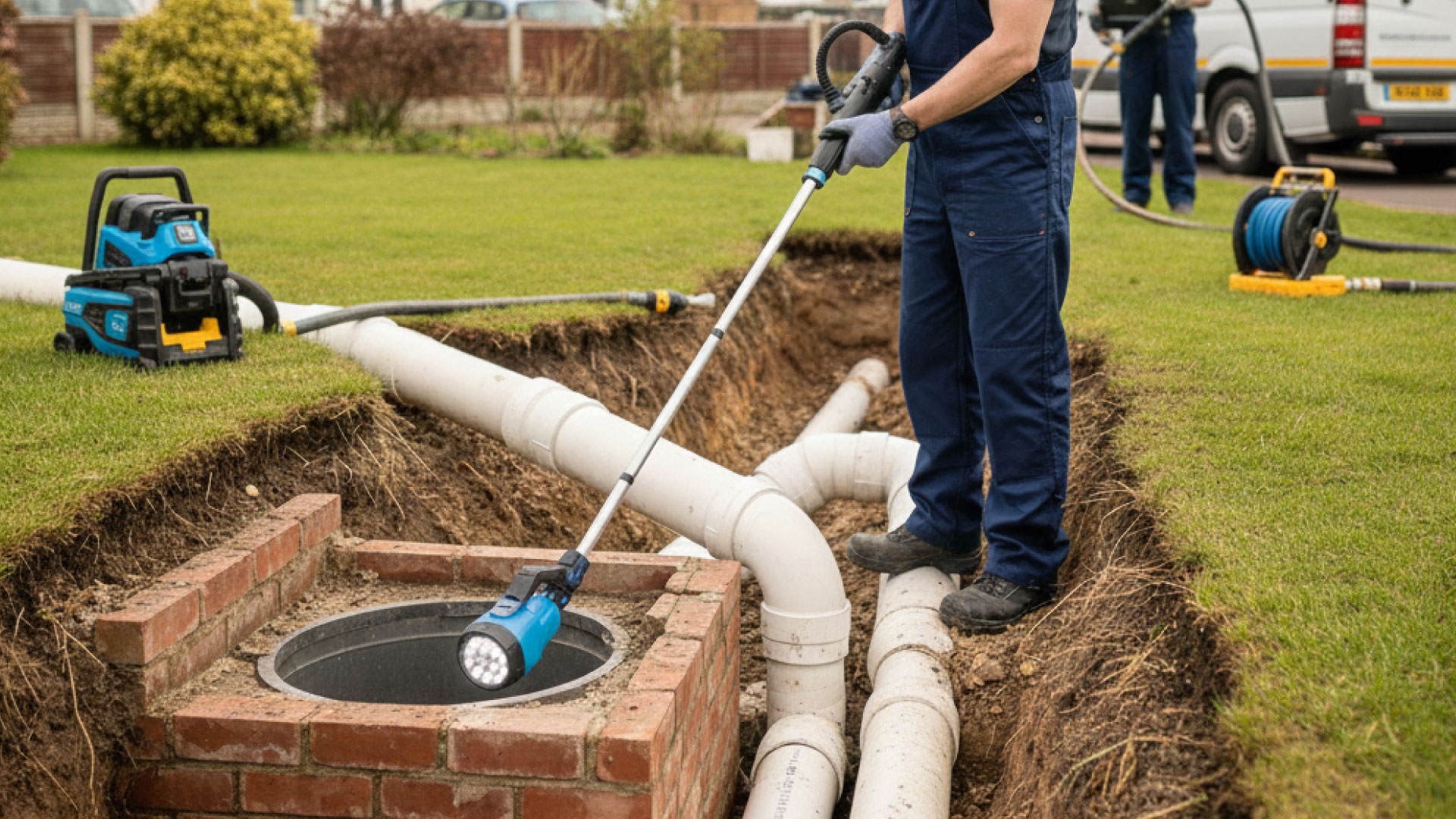
Commercial CCTV surveys identify defects and map drain routes — essential intelligence for any business expansion or refurbishment project.
Drain asset mapping — knowing what’s beneath your premises
The majority of Blackpool’s older commercial premises — particularly in the town centre and along the seafront — were built before comprehensive drainage records were maintained. Many have been extended, converted and altered multiple times over a century, with drain connections added, rerouted and abandoned by successive owners. The result is that the current occupier often has no reliable documentation of what drainage infrastructure actually runs beneath their premises.
This creates real operational risk. Maintenance decisions based on incomplete drain knowledge are guesswork. Extension projects risk cutting through or loading onto unknown drain runs. Insurance claims for drain-related damage are harder to process without documented asset records.
A commercial drain asset mapping survey from Drainage Experts (NW) traces every accessible drain run on the premises using our pan-and-tilt CCTV camera system, recording:
- The exact route of all drain runs, including any legacy pipes previously unknown to the occupier
- Pipe materials, diameters and estimated depths
- Location of all inspection chambers, gullies and connection points
- The point at which private drains connect to the public sewer
- Any build-over situations where structures sit above drain runs
- Structural condition of all surveyed sections, graded to WRc standards
The output is a comprehensive drain asset map — a scaled drawing of the complete drain layout — alongside the written structural report. This becomes a permanent operational document for the premises, updated at each subsequent survey.
Build-over surveys for expansion and refurbishment projects
Any Blackpool business planning an extension, additional structure, car park resurfacing or significant refurbishment needs to know whether the proposed works will affect existing drain runs — particularly public sewers. Building within three metres of a public sewer without United Utilities’ build-over consent creates ongoing liability for the business owner.
Commercial Drain Structural Compliance Reporting
When a commercial drainage system is surveyed, the resulting documentation needs to be robust enough to satisfy third parties. Whether you are dealing with a commercial lender for a property purchase, processing an insurance claim for structural damage, or submitting evidence to environmental health officers, a standard handwritten invoice or a vague email summary will not suffice.
Our commercial structural compliance reports are compiled using industry-standard WRc defect coding, providing a rigorous, section-by-section breakdown of your complete underground network.
What is included in a commercial structural compliance report?
A digital plan illustrating the precise layout, flow direction, pipe diameters, and depths of all surveyed runs beneath and surrounding the commercial property.
Every structural defect—such as displaced joints, root ingress, longitudinal cracking, or scale encrustation—is logged with its exact location and graded from 1 (excellent) to 5 (collapsed).
High-definition video files and clear freeze-frame photographs of any structural failures or severe grease accumulations, providing undeniable proof of the drain’s internal state.
An evaluation of any on-site grease management systems, checking capacity, operational condition, and potential threat levels to the main line as required under the Water Industry Act 1991.
If defects are found, the report outlines the most efficient remediation strategy—such as no-dig patch lining or localized excavation—complete with accurate, fixed-fee quotes.
How to Set Up a Proactive Commercial Drain Maintenance Programme
Transitioning from reactive emergency callouts to a planned, proactive maintenance routine is the most reliable way to protect your business continuity and save money over the long term. Here is how to implement a commercial drainage plan for your Blackpool premises:
Taking control of your commercial drainage assets ensures that a subterranean structural failure doesn’t compromise your front-of-house operations. With older Blackpool infrastructure, being proactive is not just a recommendation—it is a vital pillar of business risk management.
Protect Your Business Continuity Today
Don’t wait for a costly drainage backup to close your commercial premises. Secure a fixed-fee proactive maintenance quote, detailed asset map, or book a fast-response CCTV survey with Blackpool’s commercial specialists.
Call 07903 021120 Email Our Commercial Team Emergency Response: 07903 021120