
A drain failure in a business premises is a very different problem to a blocked drain at home. It can close a kitchen, trigger a food hygiene inspection, flood a retail floor or bring a hotel to a standstill — all within hours of the first sign of a problem. Yet the majority of Blackpool businesses operating from older town centre premises have never had their drain system properly surveyed or documented.
For businesses in central Blackpool’s FY1 and FY2 postcodes — where Victorian commercial buildings sit above drainage infrastructure that is well over a century old — this is a significant operational risk. Here’s what a commercial CCTV drain survey covers, why proactive maintenance is essential for business continuity, and how structural compliance reporting protects your premises from regulatory exposure.
Why Proactive Maintenance Is Essential for Business Continuity (Food & Retail Focus)
Residential drains can often tolerate a slow build-up before becoming an emergency. Commercial drains — particularly in food service, hospitality and high-footfall retail — cannot. The volume of water, fat, grease and waste passing through a busy commercial kitchen or public toilet block in a single trading day is orders of magnitude greater than a domestic system. The margin between a functioning drain and a closed kitchen is measured in weeks, not months.
The business sectors most at risk in Blackpool
High volumes of cooking fat and food debris entering drain systems daily. Fat solidifies in older clay pipes fast, forming grease sleeves that cause complete blockages with little warning.
Multi-floor drainage serving dozens of bathrooms simultaneously. Shared drain runs in converted Victorian properties are among the most complex and failure-prone systems we survey.
High beer and waste volumes combined with FOG (fat, oil and grease) from bar snacks and cleaning. Cellar drainage and external gully drain blockages are particularly common.
Often overlooked — but retail units with staff toilets, cleaning facilities and food preparation areas all have drainage that requires maintenance. Shared drain runs in older retail blocks compound the risk.
Non-flushable items and specialist waste materials cause frequent blockages. Regulatory inspection requires drainage to be maintained to a high standard — documented maintenance records are essential.
High-turnover occupancy creates peak loading on older drain systems. Short-let holiday accommodation in Blackpool’s town centre is particularly susceptible to rapid blockage build-up between changeovers.
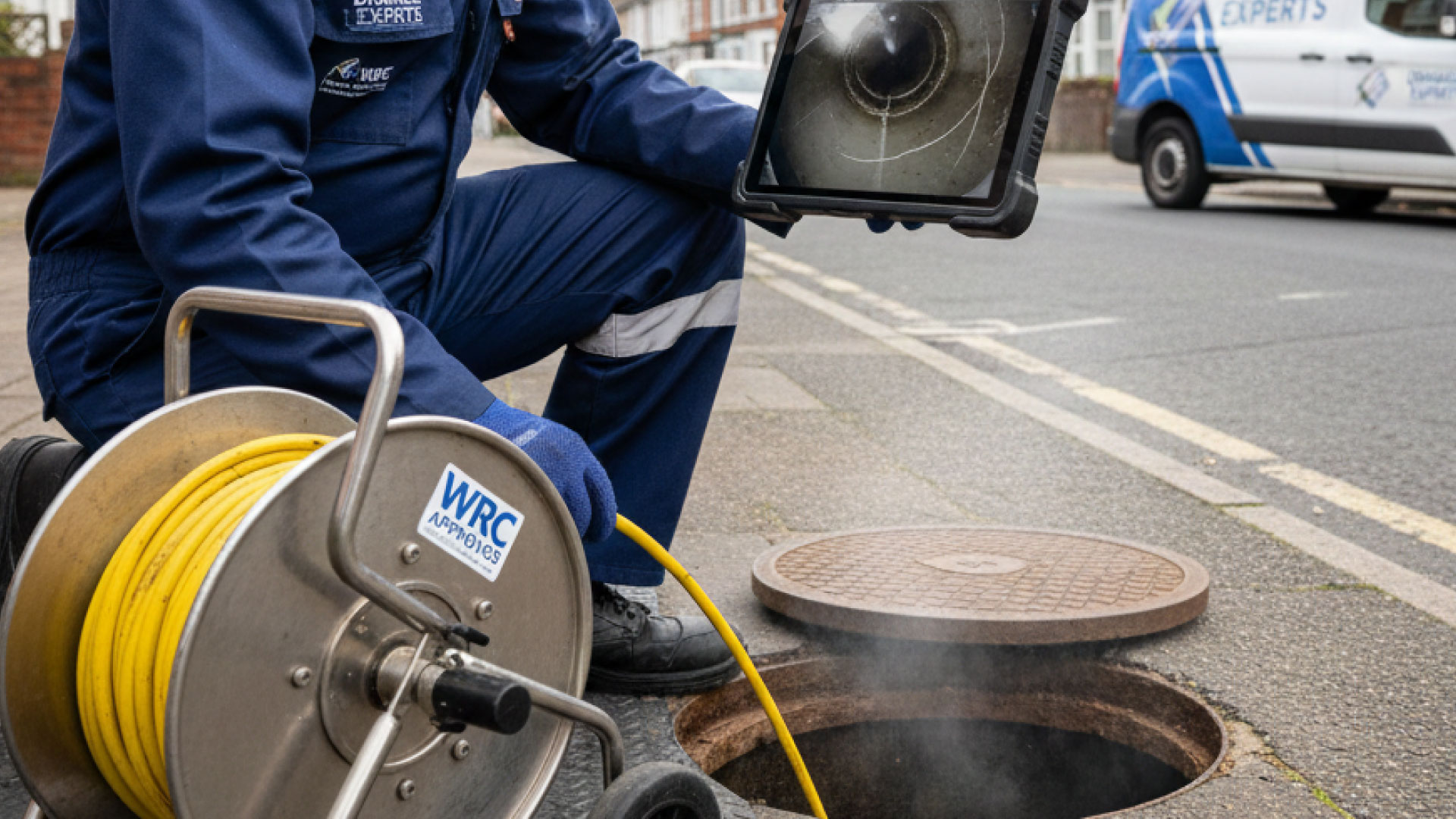
Live commercial CCTV drain survey — every section of pipe inspected, graded and documented in the structural report.
Food hygiene compliance and drain maintenance
For any business handling food — from a town centre café to a large hotel kitchen — drain maintenance is directly tied to regulatory compliance. The Food Standards Agency requires food businesses to maintain drainage in a clean, hygienic and functional condition under Regulation (EC) No 852/2004 on the hygiene of foodstuffs. A blocked or poorly maintained drain in a food preparation area is classified as a food safety hazard.
During a Food Hygiene Rating Scheme inspection by Blackpool Council’s environmental health team, a drain that is slow, malodorous or showing evidence of past blockages will be noted as a hygiene concern — potentially affecting your rating. A documented maintenance programme with annual CCTV survey records demonstrates proactive compliance and significantly strengthens your position during inspections.
The cost of reactive vs proactive drainage management
Emergency commercial callouts cost more than planned maintenance — typically significantly more when you factor in out-of-hours rates, business disruption and the risk of regulatory consequences. Our commercial drainage maintenance programme provides planned preventive jetting and annual CCTV surveys on a fixed-fee basis — predictable maintenance costs rather than unpredictable emergency expenses.
Build-Over Surveys & Asset Mapping for Expansion Projects
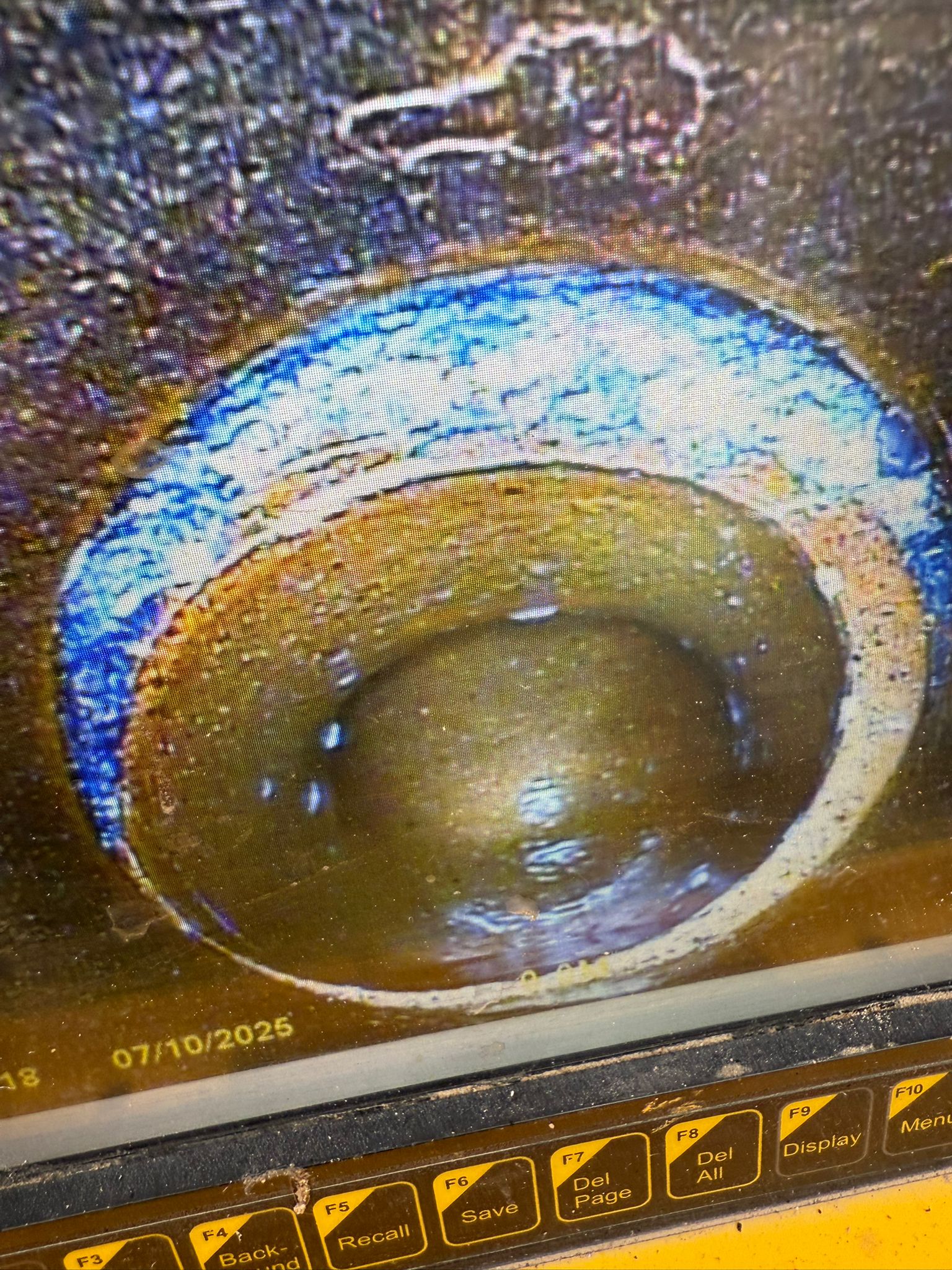
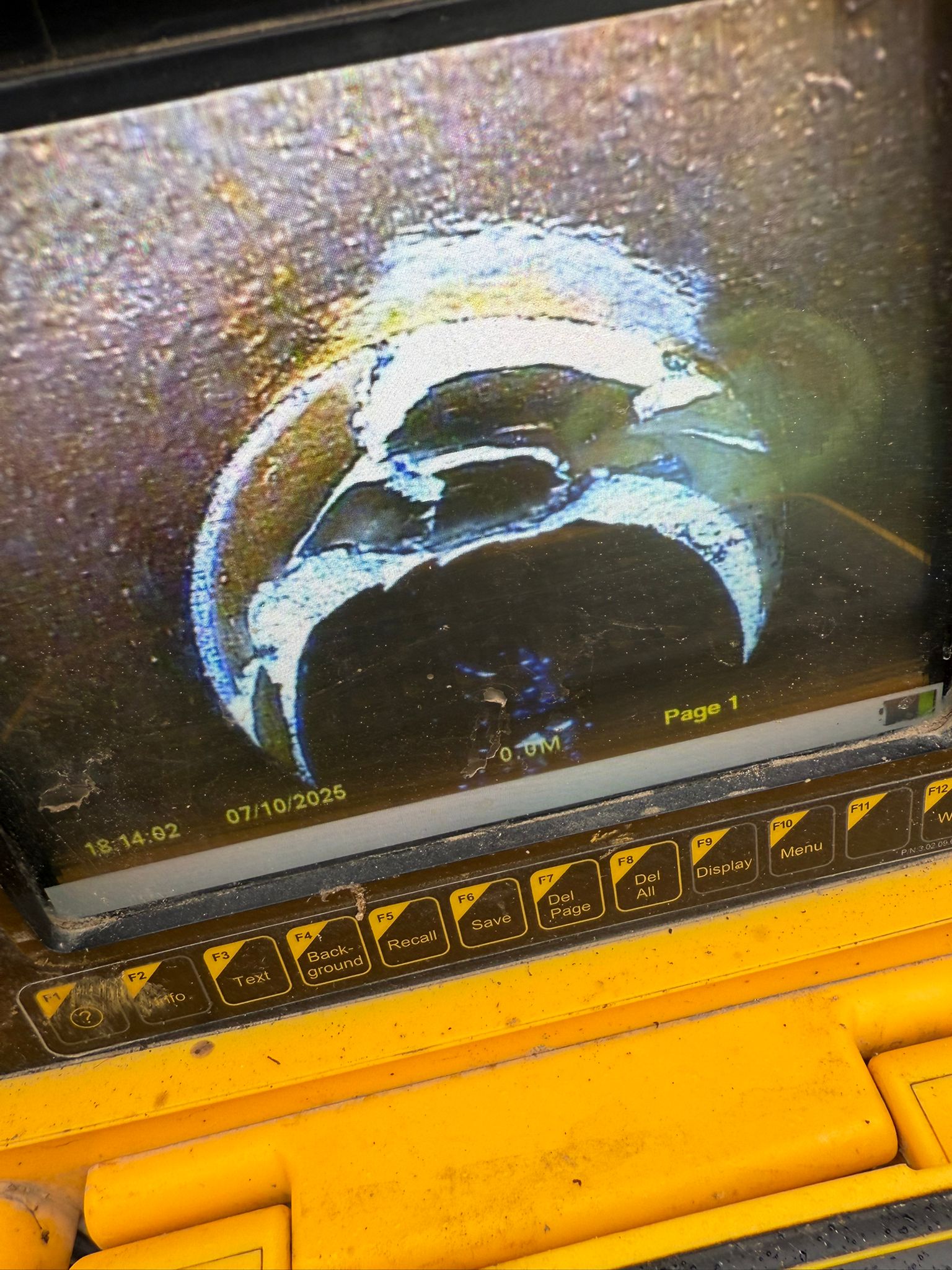
Commercial CCTV surveys identify defects and map drain routes — essential intelligence for any business expansion or refurbishment project.
Drain asset mapping — knowing what’s beneath your premises
The majority of Blackpool’s older commercial premises — particularly in the town centre and along the seafront — were built before comprehensive drainage records were maintained. Many have been extended, converted and altered multiple times over a century, with drain connections added, rerouted and abandoned by successive owners. The result is that the current occupier often has no reliable documentation of what drainage infrastructure actually runs beneath their premises.
This creates real operational risk. Maintenance decisions based on incomplete drain knowledge are guesswork. Extension projects risk cutting through or loading onto unknown drain runs. Insurance claims for drain-related damage are harder to process without documented asset records.
A commercial drain asset mapping survey from Drainage Experts (NW) traces every accessible drain run on the premises using our pan-and-tilt CCTV camera system, recording:
- The exact route of all drain runs, including any legacy pipes previously unknown to the occupier
- Pipe materials, diameters and estimated depths
- Location of all inspection chambers, gullies and connection points
- The point at which private drains connect to the public sewer
- Any build-over situations where structures sit above drain runs
- Structural condition of all surveyed sections, graded to WRc standards
The output is a comprehensive drain asset map — a scaled drawing of the complete drain layout — alongside the written structural report. This becomes a permanent operational document for the premises, updated at each subsequent survey.
Build-over surveys for expansion and refurbishment projects
Any Blackpool business planning an extension, additional structure, car park resurfacing or significant refurbishment needs to know whether the proposed works will affect existing drain runs — particularly public sewers. Building within three metres of a public sewer without United Utilities’ build-over consent creates ongoing liability for the business owner.
Our build-over surveys confirm the location, depth and structural condition of any public sewer affected by proposed works, providing the documentation United Utilities require for build-over consent and giving your project team the information needed to design around existing drain infrastructure rather than discovering it mid-build.
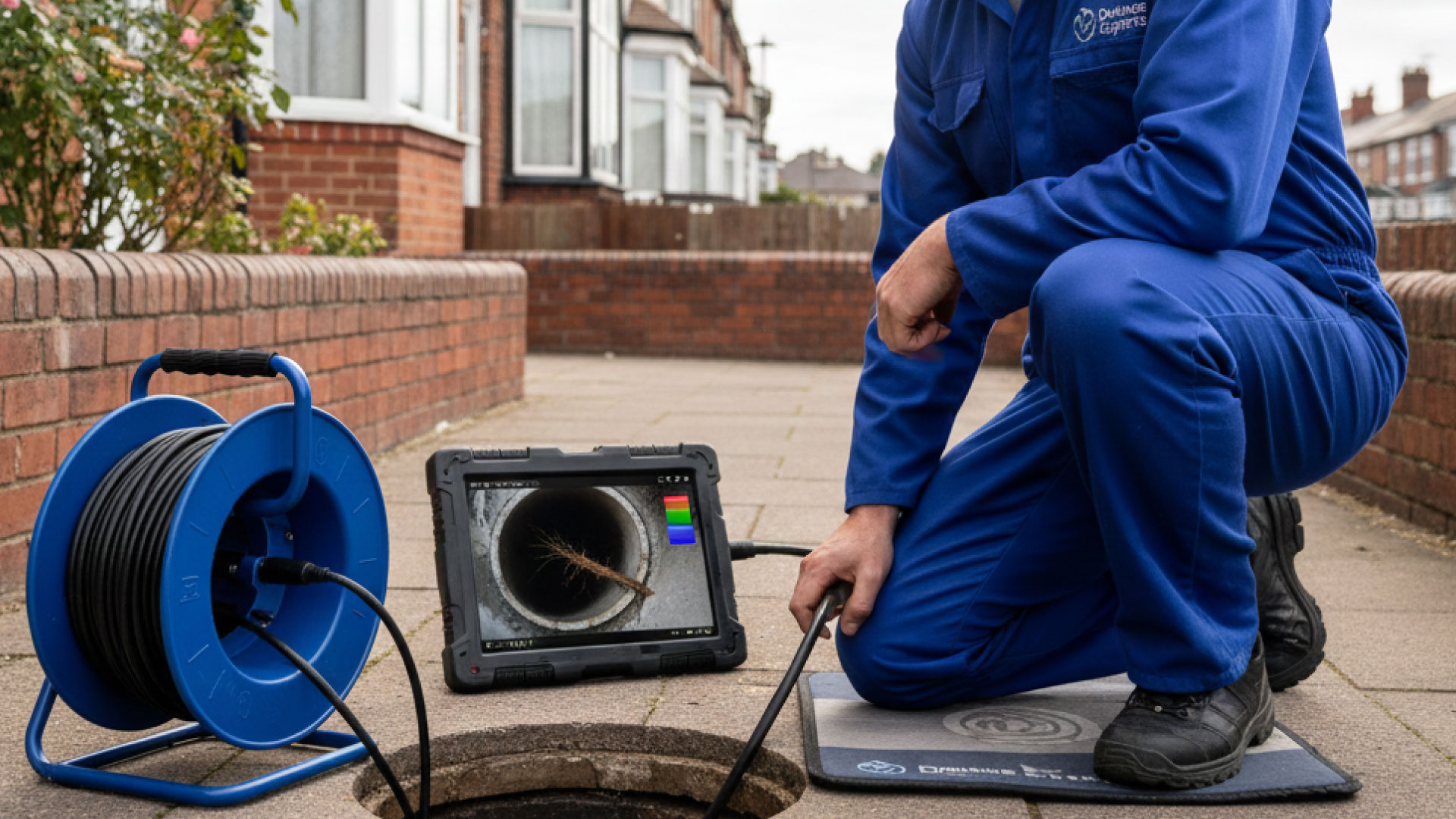
Drain asset mapping provides a complete documented record of all drain infrastructure beneath a commercial premises — essential for expansion planning and insurance purposes.
Structural Reports and Asset Validation for Regulatory Compliance
The written structural report produced by a commercial CCTV drain survey is not simply an internal maintenance document. For many Blackpool businesses, it is a regulatory requirement — or the primary form of evidence in insurance claims, planning applications and environmental health inspections.
What our commercial structural report includes
Scaled drawing of all surveyed drain runs showing routes, connection points, inspection chamber locations, pipe materials and diameters — formatted for use by architects, project managers and planning teams.
Each pipe section is graded using the Water Research Centre’s standard drain condition coding system — the industry-recognised framework accepted by insurers, local authorities and commercial lenders across the UK.
Every identified defect is photographed and referenced to its location on the drain map. Full camera footage is retained and available on request — useful for contractor quoting and insurer evidence requirements.
For food businesses, the survey includes assessment of grease trap location, condition and capacity — with recommendations on maintenance frequency and compliance with trade effluent discharge requirements.
Confirmation of whether any structures on the premises sit over or within three metres of a public sewer, and the current structural condition of the sewer at those locations.
All identified defects are prioritised — immediate action, short-term attention, or ongoing monitoring — with repair method recommendations and indicative costs for each.
A written executive summary formatted for submission to Blackpool Council environmental health officers, the Food Standards Agency, the Environment Agency, commercial insurers or planning authorities as required.
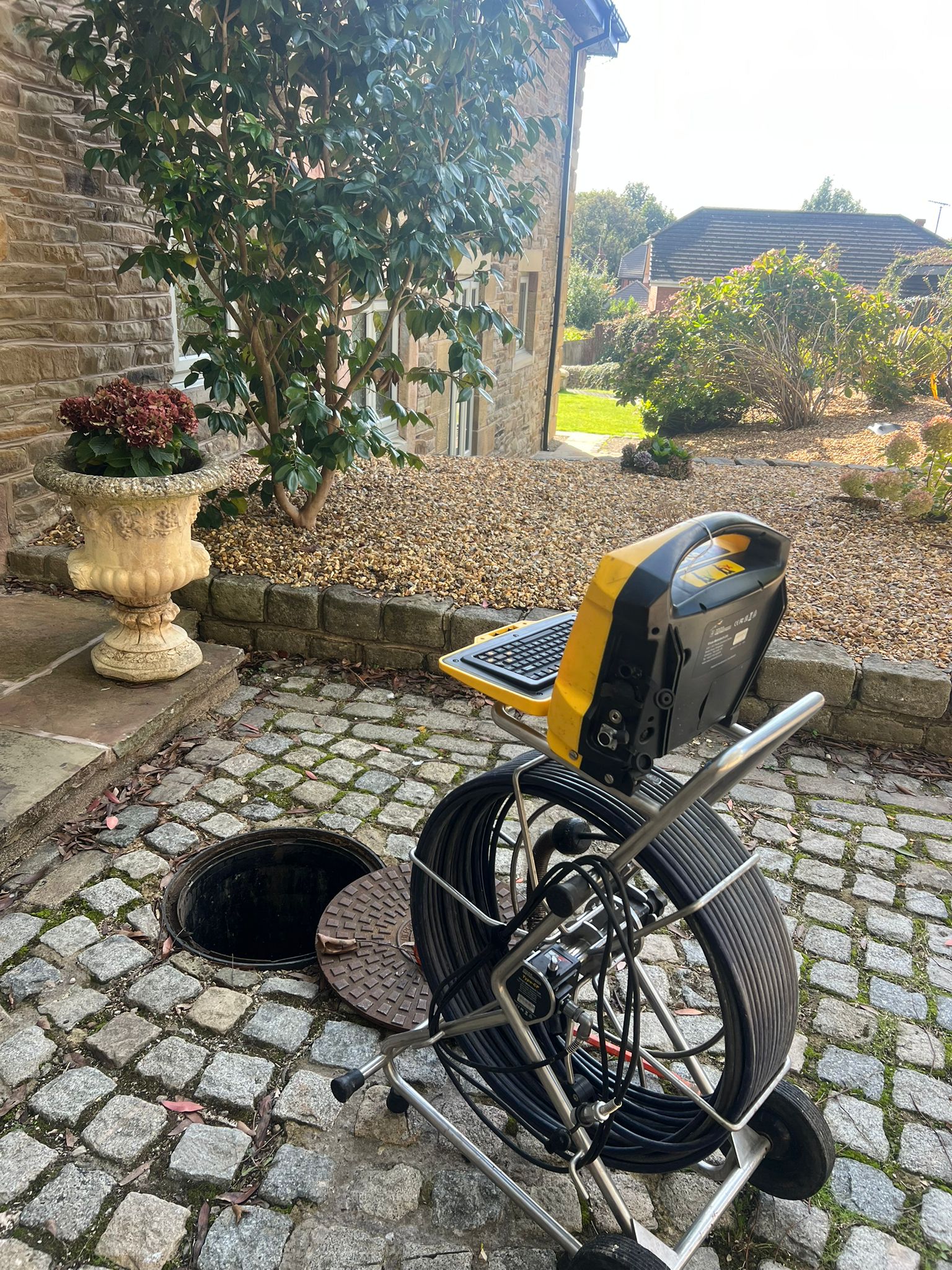
Every identified defect is documented with CCTV footage and photographs — providing the evidence standard required by insurers, environmental health officers and planning authorities.
Insurance and environmental compliance
Commercial property insurers increasingly require documented drainage maintenance records as a condition of cover for drain-related claims. A business that cannot demonstrate proactive maintenance may find a drain collapse or flood claim disputed. An annual CCTV survey report provides the documented maintenance record that protects your claim.
The Environment Agency can take enforcement action against businesses responsible for pollution of watercourses from drain failures. For premises near the coastline or waterways — a significant proportion of Blackpool’s commercial premises — maintaining documented evidence of drain structural integrity provides a degree of protection against enforcement liability.
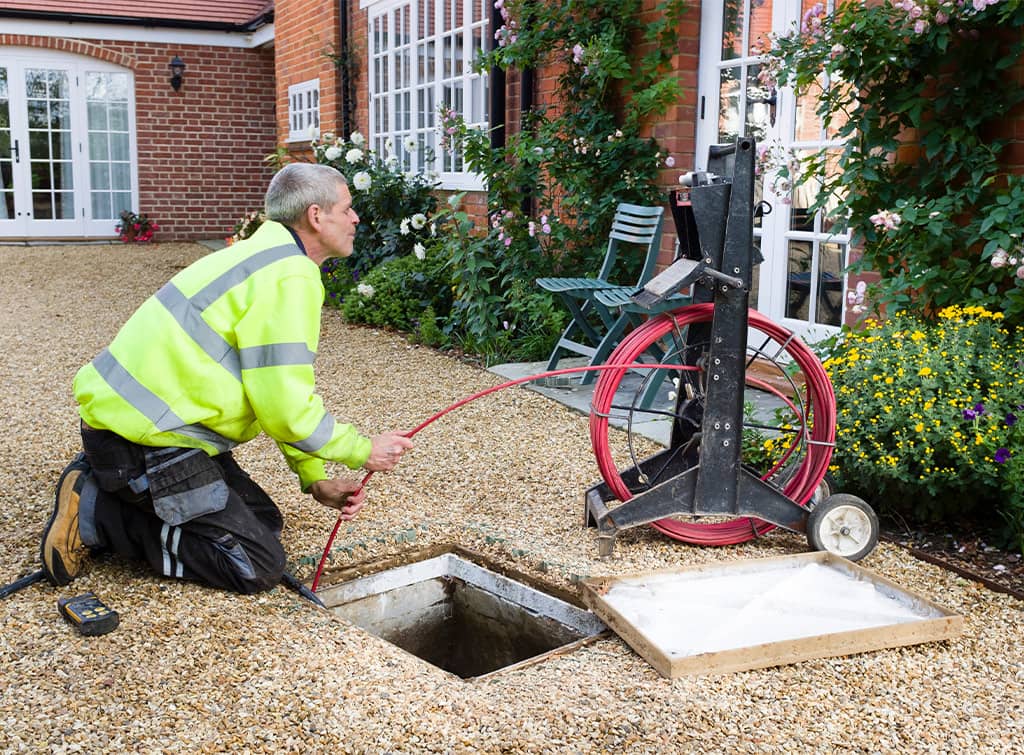
Our Blackpool-based commercial drainage specialists work around your trading hours — minimising disruption while delivering a comprehensive survey and report.
Operating a Business in Central Blackpool?
Protect your asset with specialised localised maintenance. We provide rapid-response commercial unblocking and validate your structural integrity with a FREE CCTV Inspection when we clear your blockage — giving you documented evidence of the cause and confirmation the pipe is structurally sound.
Commercial Drainage Services Get a Quote 07903 021120 — Commercial EnquiriesWritten Reports • WRc Condition Coding • Asset Mapping • All FY Postcodes • 24/7 Emergency Response