
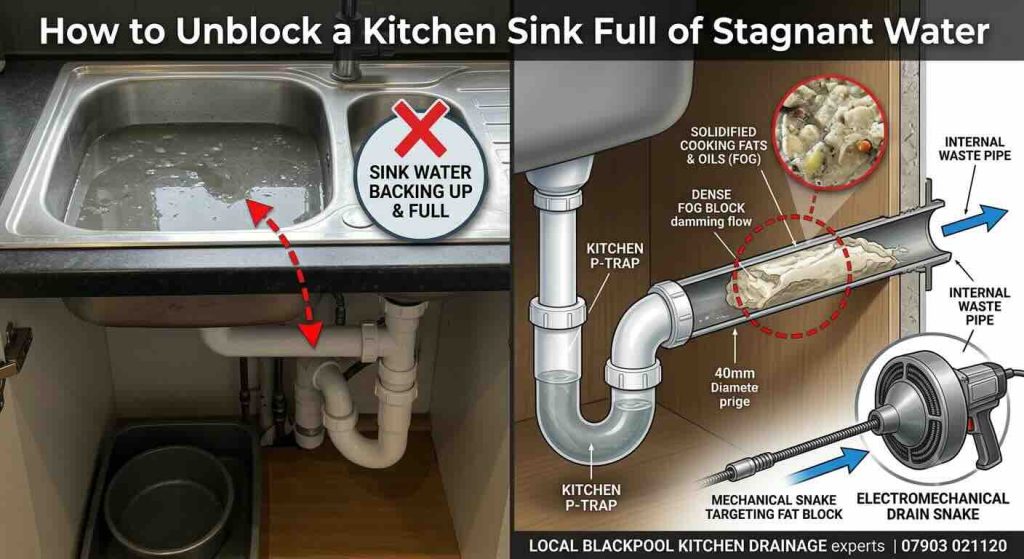
How to Unblock a Kitchen Sink Full of Stagnant Water
Walking into the kitchen to find your sink water backing up with a murky, greasy pool of stagnant water is enough to cause instant panic. Unlike bathroom blockages, which are almost always caused by loose hair and soap scum, a kitchen sink blockage is an entirely different chemical beast.
When wastewater refuses to drop even a millimetre over several hours, you are dealing with an internal pipeline restriction that requires immediate diagnostic action. Pouring retail products down the drain or trying to aggressively plunge a double sink filled to the brim won’t solve the issue. You need a methodical, safe strategy to clear the water and target the root structural cause without ruining your kitchen cupboards.
The Critical Chemical Warning: Stop the Store-Bought Chemicals!
When the basin is filled with standing water, your first instinct might be to reach for a retail liquid unblocker. Do not do this. Pouring chemical drain cleaners into a sink full of stagnant water completely dilutes the active ingredients, rendering them useless against the blockage. Worse, it turns your sink into a highly corrosive, toxic bath. If you eventually have to dismantle the plastic plumbing pipes underneath, that caustic water can cause severe chemical burns to your skin and eyes.
The Real Culprit: Understanding FOG (Fats, Oils, and Grease)
If you keep asking yourself how to unblock kitchen sink fat accumulations, you have to look at how these blockages develop. Kitchen pipes become choked due to an accumulation of emulsified cooking fats, oils, and grease (collectively known in the drainage trade as FOG).
When hot grease or oil is rinsed down the drain from pans and plates, it looks completely harmless as a liquid. However, as it travels deeper into your subterranean sub-floor waste lines, the water rapidly cools. The liquid fat cools down, solidifies, and binds together with trapped food particles, coffee grounds, and starchy residues. Over several months, this mixture hardens into an incredibly dense, candlewax-like block that leaves no room for wastewater to pass.
| Blockage Type | Physical Character | Why Plunging Fails |
|---|---|---|
| Bathroom Hair Clogs | Loose, stringy, tangled masses. | Water can slide past it temporarily; responds well to manual snaking sticks. |
| Kitchen FOG Blocks | Dense, solid, candlewax-like wax wall. | Completely air-tight. Plunging simply compresses the fat wall tighter into the pipe bends. |
Step-by-Step Guide to Safely Clear Stagnant Water and the P-Trap
Before calling for an emergency engineer, you can attempt to clear a localized blockage in the immediate under-sink pipe network using this professional checklist:
- Step 1: Manually Siphon the Stagnant Water – Put on protective rubber gloves and use a small plastic jug or cup to scoop the dirty standing water out of the sink basin. Empty it into a bucket to reveal the drain opening cleanly.
- Step 2: Clear Out the Cabinet Below – Remove all cleaning products and items from the cupboard beneath your sink. Lay down a thick old towel and place an empty shallow basin or tray directly beneath the plastic U-bend (P-trap) to catch any spills.
- Step 3: Unscrew the Plastic Compression Nuts – Modern under-sink plumbing features plastic compression joints that can be unscrewed by hand (turn anti-clockwise). Carefully undo the nuts on either side of the U-bend trap.
- Step 4: Clean the Internal Trap – Pull the P-trap free. It will release a small pool of foul water into your collection tray. Look inside the pipe segment—if it’s packed full of thick white grease or food debris, clean it out under an external tap using an old brush.
- Step 5: Inspect the Wall Boundary Pipe – Peek down the waste pipe that travels through the wall. If that run is completely clear, reassemble your clean trap, tighten the nuts firmly by hand, and run the tap to check the flow.
When the Blockage is Deeper: Searching for the Best Industrial Sink Unblocker
If you remove the under-sink P-trap and find it completely empty, the restriction sits deeper within the internal waste line or at the external junction where your kitchen line meets the backyard gully.
At this depth, searching for the best industrial sink unblocker fluid is a dead end. No chemical wash can travel several metres down a pipe and melt away a rock-hard fat dam. The only permanent structural fix is mechanical intervention. Professional drainage engineers use specialized high-torque electromechanical rotary snakes or localized high-pressure water jetting machines. This equipment travels directly into the core of the pipeline, completely scoring the interior plastic walls and breaking the fat blocks into tiny, harmless pieces that wash cleanly out to the main public sewer run.
Is Your Kitchen Sink Stagnant Water Refusing to Budget?
A completely filled kitchen sink that won’t drop is an clear warning sign that a dense fat and grease block has choked your waste infrastructure. Don’t risk damaging your internal plumbing with corrosive, dangerous chemicals. At Drainage Experts, we clear stubborn kitchen FOG blockages across Blackpool and the wider Fylde Coast using specialized mechanical routing snakes and camera verification tools.
We provide completely transparent, fixed pricing for domestic emergency clearances. Our expert local team will quickly clear the standing water, remove the grease dams, and deliver a definitive drain unblocking in Blackpool to restore immediate, trouble-free drainage to your home.
Speak Directly to a Local Kitchen Drainage Specialist: 07903 021120
Our Diagnostic Operations Hub: 99 Breck Road, Poulton-le-Fylde, FY6 7AN
Book an Emergency Sink Clearance: Arrange a Professional Sink Inspection