
In all my years working on drainage across Blackpool and the Fylde Coast, foul drain smells are probably the most frustrating problem for homeowners to deal with — not because they’re necessarily serious, but because they’re so routinely misdiagnosed. A plumber checks the traps, finds nothing obvious, suggests it might be the drains outside. A drainage company jets the drains, finds no blockage, suggests it might be something inside. Meanwhile the smell persists and the cause is a hairline crack in a waste pipe behind a wall that neither approach was ever going to find.
This is the post I wish existed every time I’ve attended a Blackpool property where someone has already had three contractors out and still can’t get rid of the smell. Here’s how to actually diagnose where a foul drain smell is coming from — and why specialist CCTV and smoke testing is the only approach that reliably finds the sources that everything else misses.
Why Drain Smells Are So Often Misdiagnosed
Sewer gas follows the path of least resistance. It doesn’t respect the tidy boundaries between plumbing and drainage work, or between internal waste pipes and underground drain runs. A gas source in the underground drain can produce a smell that seems to come from inside a bathroom. A hairline crack behind a bathroom wall can produce a smell that’s strongest in the garden. Without the right diagnostic tools, finding the actual source is genuinely difficult.
The reason smells get misdiagnosed so often comes down to three things. First, most contractors investigate only their own domain — a plumber looks at internal plumbing, a drainage company looks at the underground drain system, and neither looks at the full picture. Second, the most common diagnostic approach — a visual inspection — simply cannot detect hairline cracks and micro-fractures that are the primary structural cause of gas escape in older properties. Third, some smells are intermittent — worse in hot weather, after heavy rain or at specific times of day — which makes them hard to track without specialist detection equipment.
The common sources — and how difficult each one is to find
An infrequently used fixture whose water seal has evaporated. Resolved immediately by running water into the trap. Check every sink, bath, shower tray and floor gully — including those in spare rooms and outbuildings.
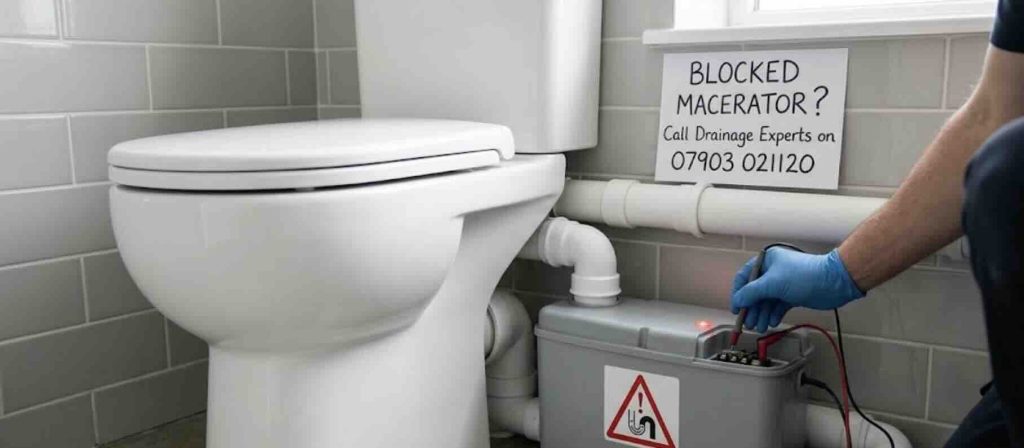
The rubber seal between the toilet pan and the soil pipe deteriorates over time, allowing gas to escape at floor level. Visible as a crack, movement in the pan, or discolouration around the base. Replacement is a standard repair.
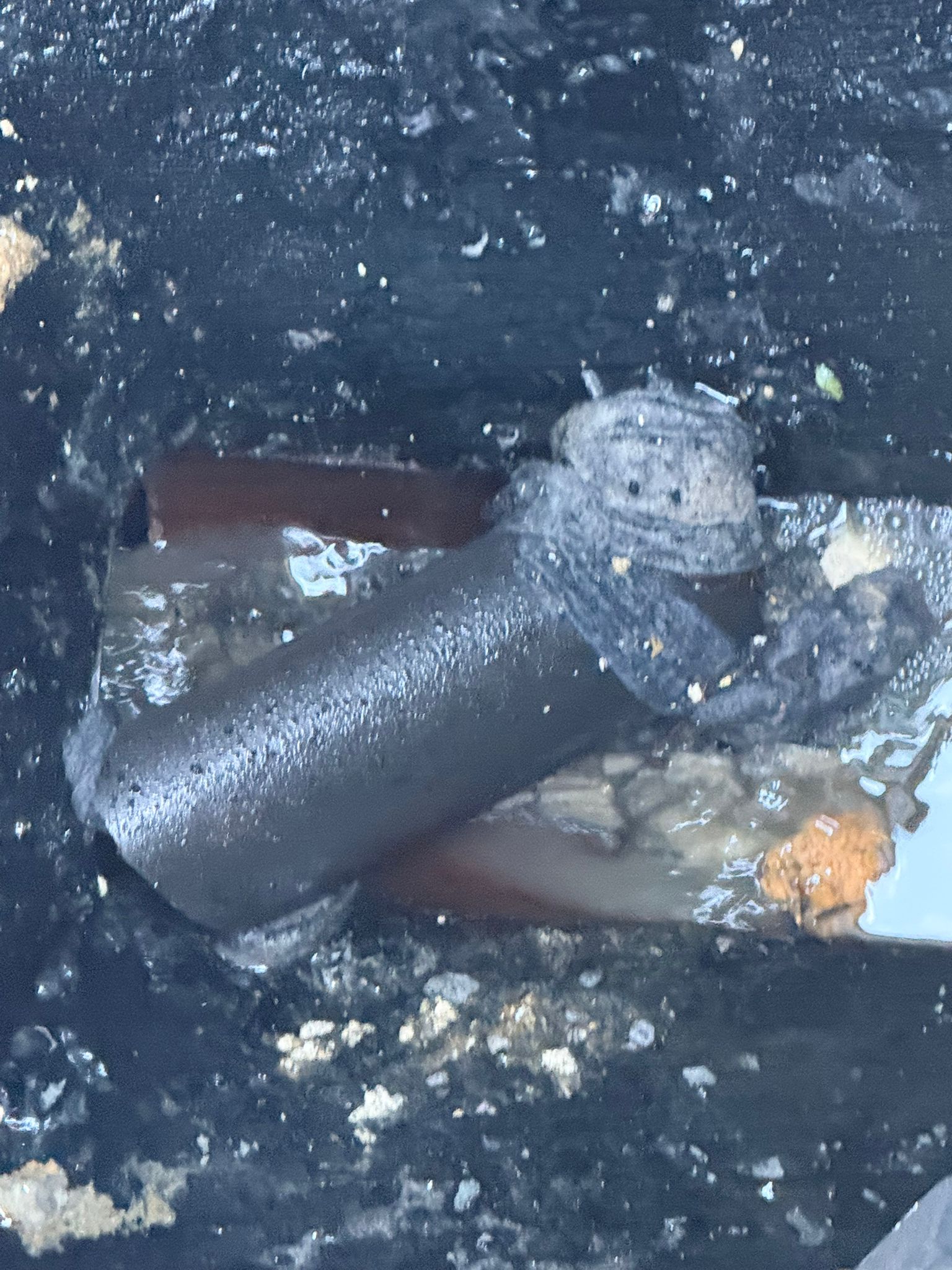
A backed-up inspection chamber in the garden produces a persistent external smell. Visible on inspection, cleared by jetting. Responsibility depends on whether it serves a private or shared drain.
Every drain system should have a vent pipe to allow air in and sewer gas out above roof level. A blocked, undersized or incorrectly installed vent pushes gas back down into the property through fixture traps — particularly noticeable when a toilet is flushed. Identifiable on CCTV and smoke testing.
A micro-fracture in a clay or plastic pipe — too small to see visually but large enough to allow constant gas escape. Particularly common in Blackpool’s older FY1–FY4 Victorian clay pipe systems. Requires smoke testing to locate reliably; CCTV alone frequently misses hairline cracks.
In older Blackpool properties, cast iron and early plastic waste pipes run concealed in wall cavities and under floor boards. Hairline cracks in these pipes allow gas to permeate through floor and wall materials before being detected in the room. Smoke testing with pressure is the only reliable detection method.
A joint that has separated — from ground movement, root pressure or age — creates a continuous gas escape point in the underground run. May not cause blockages, so standard jetting finds nothing. CCTV identifies the displacement, and smoke testing validates exactly where the gas leak is venting.
Advanced Diagnostic Tools: CCTV Surveys vs. Smoke Testing
When easy internal plumbing fixes fail to stop the odour, we bring out advanced diagnostic tools to trace the gas path completely.
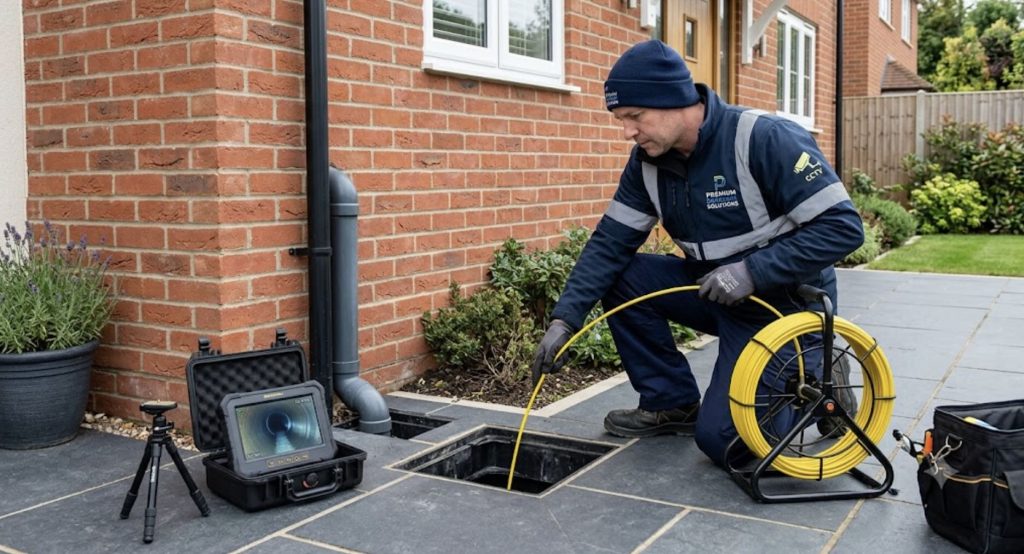
Our high-definition pipeline cameras travel down the line to spot structural damage, displaced joints, root intrusion, and low points where foul standing water accumulates. While exceptional for map-accuracy, visual surveys can pass directly past micro-fractures above the water line where volatile gases push through.
By sealing a drain sector and introducing a specialized, completely non-toxic white tracer smoke under low mechanical pressure, we reveal invisible faults instantly. Wherever smoke emerges — through an unsealed floor joint, an airbrick, or a cavity wall socket — we locate your exact leak footprint visually within seconds.
Stop Guessing the Source of Foul Drain Odours
Get a precise structural answer on the very first visit. Our specialized dual CCTV and trace-smoke testing pinpoint invisible defects across Blackpool, Poulton-le-Fylde, and all Lancashire FY postcodes.
Book Smell Diagnosis Our CCTV Services
07903021120