
Blocked External Gully Drain? How a Blackpool Specialist Clears Residential Backups | Drainage Experts
Blocked external gully drain Blackpool - specialist clearing residential backup
Drainage Advice • Blackpool & Fylde Coast

Blocked External Gully Drain? How a Blackpool Specialist Clears Residential Backups

PW
By Paul Worrall, Drainage Experts (NW)
Blackpool & Fylde Coast Drainage Advice

I’ve lived in Poulton my whole life and worked on drainage across Blackpool and the Fylde Coast for years. In that time, the blocked external gully is probably the single most misunderstood drainage problem I come across. Homeowners clear the grid, pour a bucket of water down, declare it sorted — and then call us two weeks later when it’s overflowing again. The reason it keeps coming back is almost always the same: the gully P-trap hasn’t been touched.

This article explains exactly what a gully drain is, why the P-trap is the part that matters, and why specialist jetting with CCTV validation is the only approach that actually fixes a blocked external gully properly.

What Is an External Gully Drain — and What Is the P-Trap?

Before getting into the clearing process, it helps to understand what you’re actually dealing with. An external gully drain is one of those rectangular or circular surface-level drainage points you’ll find outside most Blackpool homes — typically in the back yard or at the side of the property. They collect surface water from rain, as well as waste water from kitchen sinks and sometimes bathroom waste pipes that exit through the external wall.

They look simple from above — a metal or plastic grid sitting in a pot sunk into the ground. But the pot itself has a specific internal structure that most people — and a lot of contractors — don’t fully account for when they clear one.

Anatomy of an external gully drain
1
Gully grid (surface level)

The visible cast iron or plastic grid that covers the top of the gully pot. Catches larger debris — leaves, stones, general garden waste. Easy to clear by hand.

Usually cleared easily
2
Gully pot body

The cylindrical chamber below the grid that collects water and debris before it reaches the trap. Can accumulate significant volumes of silt, gravel and organic matter over time.

Clearable with jetting or scoop
3
P-trap (the critical section)

The U-shaped water-filled section at the base of the gully pot. Permanently holds water to prevent sewer gases entering the property. This is where silt, sand, compacted debris and grease collects — and where most recurring blockages originate.

Most commonly blocked — often missed
4
Outlet pipe

The underground drain pipe connecting the gully to the main drain run. If the gully is overflowing despite a clear P-trap, the blockage may be in this section — identified by CCTV.

Checked by CCTV validation

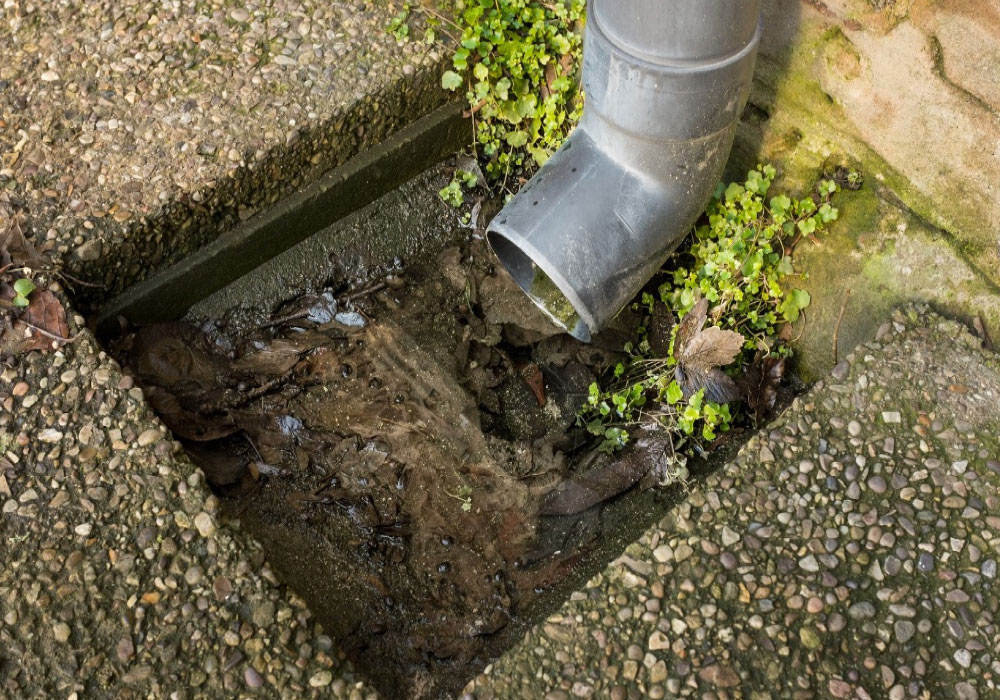
The P-trap is the bit that matters most — and the bit that most generic clearance approaches miss entirely. You can clear the grid, scoop out the pot body and pour water through until it runs freely, and still leave a completely blocked P-trap underneath. Which is exactly why the gully overflows again next time it rains.
Blocked external gully drain Blackpool - P-trap sediment build-up in gully pot

Why Blackpool gullies block more often than elsewhere

Having worked on drainage across the FY postcodes for years, I can tell you there are a few specific reasons Blackpool residential gullies tend to block more frequently than in many other areas.

First, the age of the housing stock. Victorian and Edwardian properties across FY1, FY2, FY3 and FY4 often have original clay gully pots that are narrower, rougher-surfaced and more prone to sediment accumulation than modern plastic equivalents. Some of these pots haven’t been properly cleared in decades.

Second, coastal sand. In streets closest to the seafront — particularly in FY1, FY2 and FY4 South Shore — wind-blown sand washes into gully pots constantly. Sand compacts in the P-trap far faster than organic debris, and it requires proper jetting rather than hand clearing to shift.

Third, kitchen waste pipe connections. Many older Blackpool properties route kitchen waste directly into an external gully rather than connecting internally to the drain stack. Every time the kitchen sink drains, fat, grease and food particles wash into the gully pot — accelerating P-trap blockage significantly.

“I’ve cleared gullies in Blackpool back yards where the P-trap was completely packed with a mixture of compacted sand, grease and decomposed leaf matter going back years. The grid was spotless — the homeowner had been keeping it clear — but the trap had never been touched.”

Why Generic Unblocking Often Misses Gully P-Trap Sediment

Specialist gully drain clearing Blackpool - jetting blocked gully pot contents

This is the part I want to be straight with you about, because I’ve seen it cause a lot of frustration for Blackpool homeowners. A lot of drainage companies — and a lot of DIY attempts — clear a blocked gully by doing one or more of the following: removing visible debris from the grid, scooping out the pot body with a trowel or gloved hand, or running a garden hose into the top until water flows.

All of these approaches address the surface-level symptoms. None of them reliably clear a blocked P-trap. Here’s why that matters.

Approach Clears grid debris Clears pot body Clears P-trap sediment Checks outlet pipe
Hand clearing the grid Yes No No No
Scooping the pot body Yes Partially No No
Garden hose flush Yes Partially Rarely No
Specialist jetting + CCTV Yes Yes Yes — confirmed Yes — camera checked
Don’t rod a gully P-trap
Attempting to clear a gully P-trap with drain rods is one of the most common causes of gully damage I see in older Blackpool properties. Rods forced through the trap can crack the trap seal, dislodge the P-trap section from its housing, or push compacted sediment further into the outlet pipe rather than clearing it. A cracked trap seal then allows sewer gases into the property — an entirely separate and unpleasant problem. Leave the rods in the van for this one.

What specialist jetting actually does differently

Professional high-pressure jetting equipment operates at significantly higher pressures than any consumer product. More importantly for gully clearing, specialist nozzle configurations direct water at the correct angle to flush the P-trap section — pushing sediment through the trap and into the outlet pipe rather than compacting it further.

The difference in outcome is significant. A garden hose running into the top of a gully pot exerts minimal pressure at the trap level and typically just displaces the top layer of sediment, giving the temporary appearance of clearance. Specialist jetting strips the trap clean from pot entry to outlet connection.

For gullies with significant grease build-up from kitchen waste connections — common in older FY3 and FY4 properties — the jetting also strips the fat coating from the internal walls of the trap and outlet pipe, rather than just punching a temporary channel through it. This is the same principle as our fat and grease removal service applied specifically to gully systems.

CCTV Validation: Proving the Gully Trap Is Clean

CCTV validation after gully drain clearance Blackpool - post clearance inspection Cleared external gully drain Blackpool - P-trap clean after specialist jetting

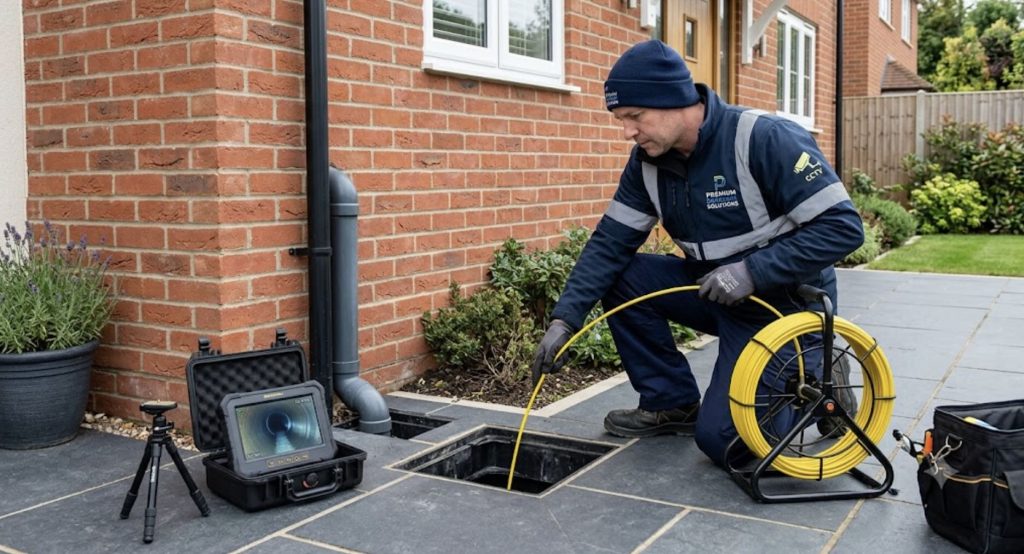
Post-clearance CCTV validation — confirming the P-trap and outlet pipe are fully clear before we leave the job.

Clearing the P-trap is one thing. Knowing it’s clear — and that the outlet pipe connecting the gully to the main drain run is also clear — is another. This is why every gully clearance we carry out includes a CCTV validation as standard.

After jetting, the camera goes in to confirm two things. First, that the trap has been completely cleared and the outlet is open. Second, that the underground pipe connecting the gully to the main drain run has no blockage or structural defect that would cause the gully to back up regardless of how clean the pot is.

What the CCTV validation specifically checks

1
P-trap clearance confirmation The camera confirms the trap section is clear from pot entry to outlet — no residual sediment, no grease coating, no compacted material that a brief flow of water might have missed.
2
Outlet pipe condition The pipe connecting the gully to the main drain run is inspected for blockages, root ingress, displaced joints and partial collapses — the underground issues that can cause a gully to overflow even when the pot and trap are perfectly clear.
3
Connection to main drain In older Blackpool properties, the gully outlet often connects to a shared lateral drain rather than a dedicated private pipe. The camera confirms this connection is clear and identifies whether any issues at the junction point need attention.
4
Sand accumulation check (coastal properties) For FY1, FY2 and FY4 properties near the seafront, the camera specifically looks for sand deposits in low-gradient sections of the outlet pipe — which can reblock a freshly-cleared gully within days if left in place.
What you get when we leave
When we’ve finished a gully clearance at your Blackpool property, you know three things for certain: the gully grid and pot are clear, the P-trap has been jetted clean and confirmed by camera, and the outlet pipe connecting to your main drain is free of blockage and structurally sound. That’s the difference between a temporary fix and a job that’s actually done properly.

When a blocked gully points to a bigger problem

Occasionally the CCTV validation after a gully clearance reveals something that the gully clearing alone wouldn’t have surfaced. The most common findings are root ingress into the gully outlet pipe — particularly in FY3 properties with established rear yard planting — and displaced joints in the lateral pipe connecting multiple gullies on the same property.

If the camera identifies either of these, we’ll show you the footage directly and give you a clear, honest assessment of what’s there and what the options are. In most cases a no-dig drain lining repair can address outlet pipe defects without any excavation — particularly relevant in paved back yards and driveways where digging up the surface would be disproportionately disruptive.

It’s also worth knowing the difference between a gully problem and a shared sewer problem. If multiple gullies across neighbouring properties are overflowing simultaneously, or if inspection chambers nearby are backing up at the same time, the issue is likely in the shared lateral drain or public sewer rather than the individual gully — and that becomes United Utilities’ responsibility rather than yours. We’ll identify which situation you have and advise accordingly.

Gully maintenance — how often?
For a standard residential property in Blackpool without a kitchen waste connection to the gully, an annual clear is typically sufficient — ideally in autumn after leaves have fallen. For properties where kitchen waste runs into an external gully, or for FY1 and FY4 coastal properties with sand ingress, twice-yearly clearing is more appropriate. A one-off CCTV survey at the start of a maintenance programme tells you the current condition of your gully and outlet pipe and sets the baseline for future visits.
£50
Fixed fee for gullies cleared by hand No call-out charge • CCTV validation included • All FY postcodes • Jetting-required jobs quoted before work begins

Blocked Gully Drain Outside Your Blackpool Home?

Generic unblocking can’t fix a blocked P-trap — and won’t tell you if the outlet pipe is the real problem. Our specialist localised jetting service clears the full gully system and validates the structure with a free CCTV inspection, proving the gully trap is clean before we leave.

Book a Gully Clearance All Blocked Drain Services 07739 961430 — Blackpool & Fylde Coast

£50 fixed fee where cleared by hand • All FY Postcodes • Free CCTV included • No call-out charge

Leave a Comment

Your email address will not be published. Required fields are marked *

Call Now