
Tree root ingress is one of the most destructive — and frequently misdiagnosed — drainage issues affecting homeowners across Blackpool and the Fylde Coast. Operating completely out of sight, root systems target fragile underground pipes, growing progressively denser with each seasonal shift. By the time noticeable problems arise, properties have often endured multiple emergency clearance call-outs that only treated the symptoms rather than the structural cause. This guide outlines how to recognize the early warning signs, why Blackpool’s unique housing stock is incredibly vulnerable, and how advanced diagnostics shield your wallet from catastrophic structural failures.
Visible Signs: Unexplained Sinkholes, Subsidence, and Cracking Pavement
Root ingress rarely triggers a sudden, dramatic failure out of nowhere. Instead, it offers subtle physical clues across your garden, yard, or paving stones that are easy to misinterpret as simple property settling. Catching these early indicators prevents deep-seated structural pipe collapse.
Above-ground warning signs to watch for
The same drain blocks repeatedly despite professional clearing. Roots grow back into cleared pipes within weeks unless the structural entry point is sealed.
Soft, spongy or slightly sunken areas in the garden directly above the drain line — caused by soil being washed into a cracked pipe by escaping wastewater.
Patio slabs, block paving or concrete cracking along the line of the drain — caused by intense root pressure or localized soil subsidence where a pipe has partially failed.
A persistent sewage odour in the garden — particularly near inspection chambers — indicates wastewater escaping through a cracked pipe section.
Kitchen sink, toilet and bath all draining slowly simultaneously — a sign the main line rather than an individual branch pipe is compromised.
A section of lawn that stays greener and grows faster than surrounding grass — often directly above a cracked drain that’s been fertilizing the soil with escaping wastewater.
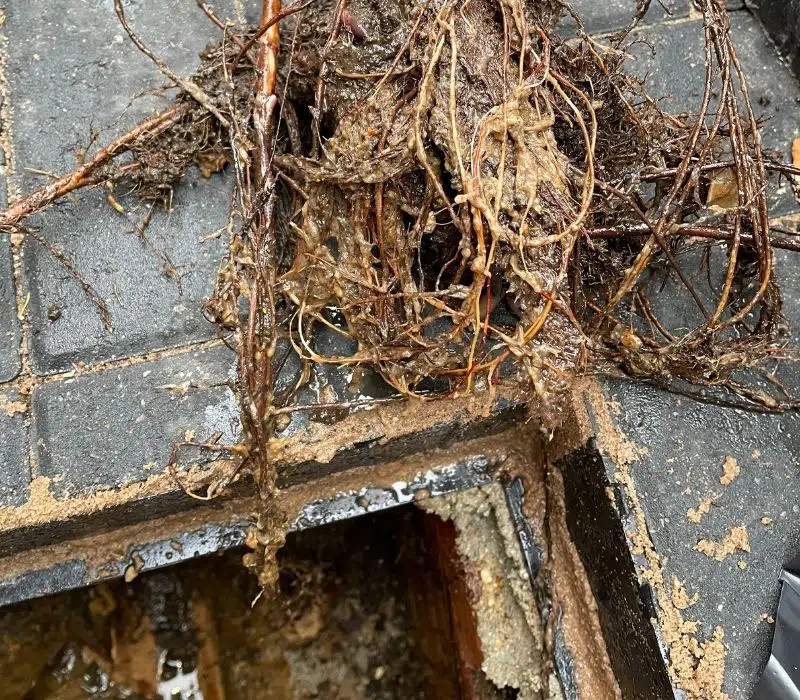
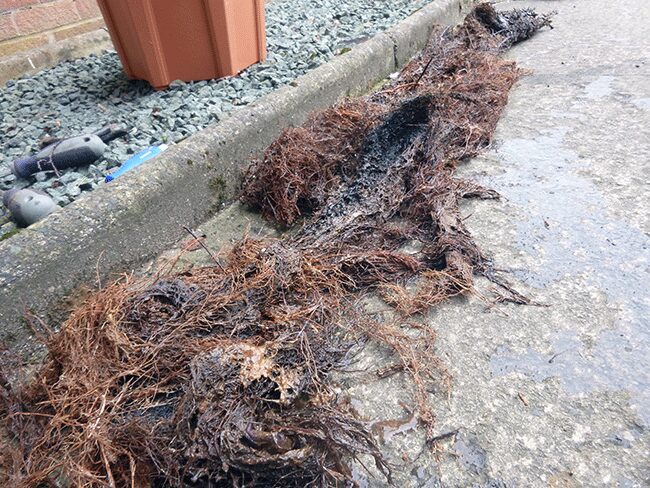
Roots inside a Blackpool drain pipe — once established, they grow rapidly and trap debris until the pipe is completely blocked.
Why roots target drain pipes
Tree and plant roots are naturally drawn to drainage pipes by the warmth, moisture, and nutrients they constantly emit. According to the Royal Horticultural Society, even trees planted at significant distances from a drain run can send roots in search of moisture — particularly during dry periods when the drain is one of the few reliable water sources underground.
Roots enter through microscopic hairline cracks, deteriorating mortar joints between clay pipe sections, or poorly sealed connection points. Once inside the pipe, they thrive in the warm, oxygen-rich environment and grow rapidly, forming a dense fibrous mass that traps passing debris until the pipe is effectively blocked.
“Standard unblocking can clear the root mass and restore flow temporarily — but without repairing the entry point, you’re not solving the problem. You’re just cutting the roots back until they regrow.”
This is why recurring blockages are the ultimate red flag. If you’ve had the same drain cleared more than once in twelve months and it keeps blocking — particularly if there are mature trees or large shrubs near the drain run — root ingress should be your first suspect. Our specialized CCTV drain survey service is the only reliable way to confirm it.
Why Old Clay Pipes (Targeted by Tree Roots) Require Specialised CCTV
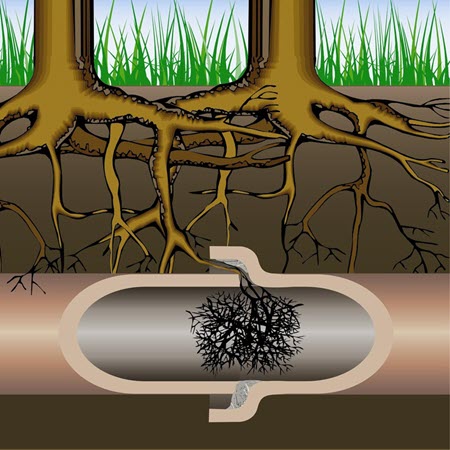
Dense root mass cleared from a Fylde Coast drain — clay pipe joints are the most common entry point for roots in older Blackpool properties.
Why Blackpool’s clay pipes are the most vulnerable
Blackpool and the surrounding Fylde Coast have an unusually high proportion of original Victorian clay drainage infrastructure still in active use. In areas like FY1, FY2, FY3 and FY5 — where terraced housing stock dates back to the late 19th and early 20th century — original clay pipes are the rule rather than the exception. If you are experiencing major structural breaks around these areas, you can look into our dedicated resource for sewer collapse repairs.
Clay pipes have several characteristics that make them particularly susceptible to root ingress compared to modern plastic pipework:
- Mortar joints between sections — clay pipes are laid in sections joined with mortar, and those joints deteriorate over 100+ years, creating gaps that roots easily exploit
- Inherent brittleness — clay becomes more brittle with age and is prone to hairline cracking under ground movement, vehicle loading on rear alleys, and root pressure
- Porous surface — unlike smooth plastic, the slightly porous surface of older clay pipe can allow moisture to seep through even before visible cracking, attracting roots to the pipe wall
- Shared drain runs — many older terraces share a communal clay drain running beneath the rear yard, meaning root damage to one section affects multiple properties. Homeowners can check liability rules on our overflowing drain council or homeowner responsibility guide.
United Utilities — who manage the public sewer network across the North West — report that tree root ingress is one of the leading causes of sewer blockages and collapses in the region. Properties with older clay infrastructure and mature trees nearby are consistently the highest-risk category.
Why standard CCTV isn’t always enough
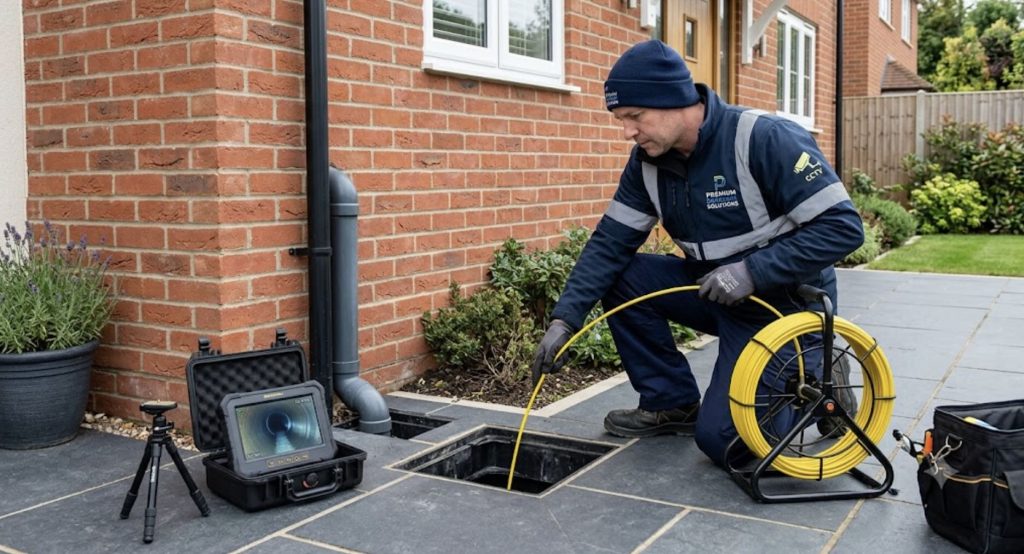
Root ingress diagnosis requires more than simply running a camera down the pipe. In older clay systems with complex joint configurations and multiple potential entry points, a standard camera pass can miss root intrusions that are early-stage or located at joints rather than mid-pipe. Our specialist CCTV drain survey uses rotating pan-and-tilt camera heads that inspect joints, bends and connection points in detail — the locations standard camera passes most commonly miss.
If you are looking to get an engineering inspection before exchanging contracts on a house, review our specialized homebuyer survey page or our dedicated article about the value of a pre-purchase drain survey in Blackpool.
After root cutting to restore flow, a second camera pass confirms the entry points and assesses the structural condition of the pipe — determining whether ongoing maintenance jetting is sufficient, or whether a permanent repair is needed to prevent re-entry. Learn about our targeted underground clearance steps on our root removal service detail hub.
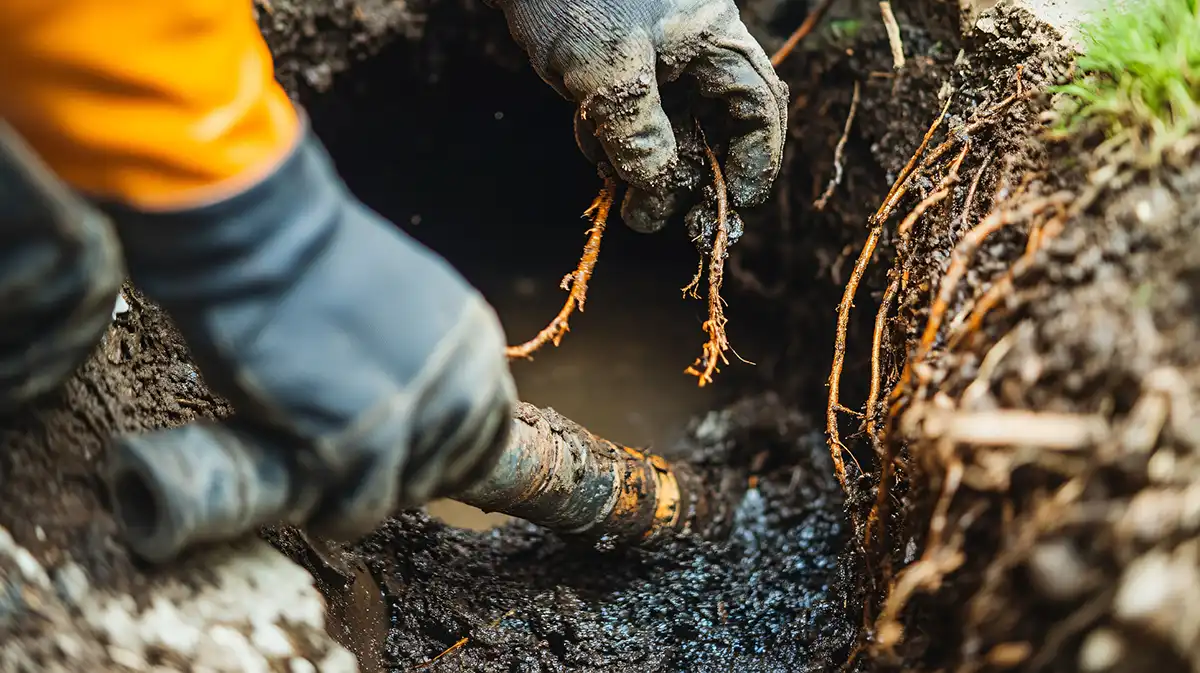
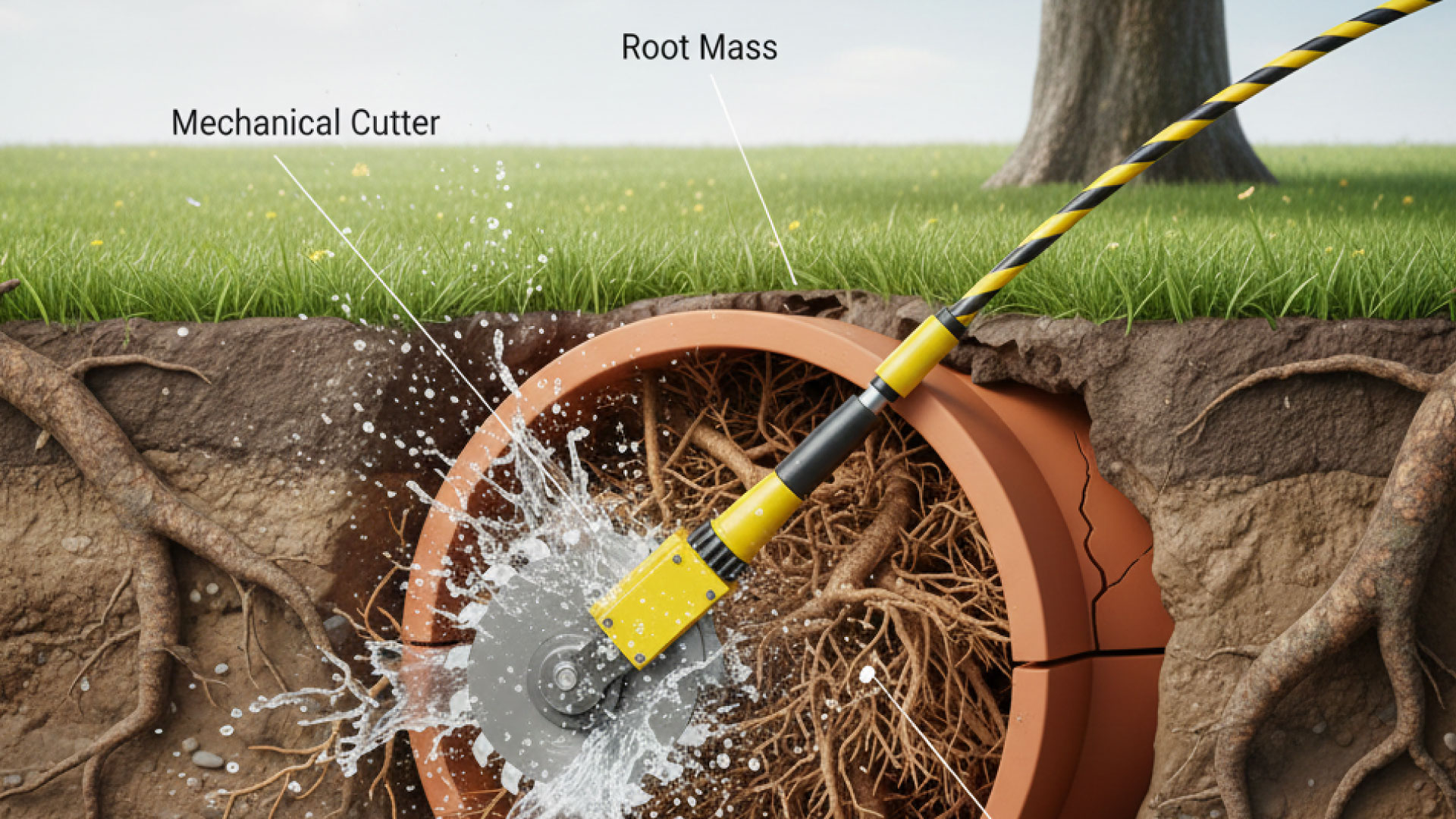
Specialist root cutting equipment reaches into the pipe to remove roots at source — followed by CCTV to confirm the entry point.
CCTV Repair vs. Traditional Trench Digging: The Cost-Saving Difference
Once root ingress is confirmed by CCTV, you have a choice of repair methods. Understanding the difference between them — and the cost implications of each — is crucial, particularly in Blackpool’s older terraced streets where excavation is far more disruptive than in newer developments. If you want to check local call-out rates, see our blocked outside drain cost in Blackpool guide.
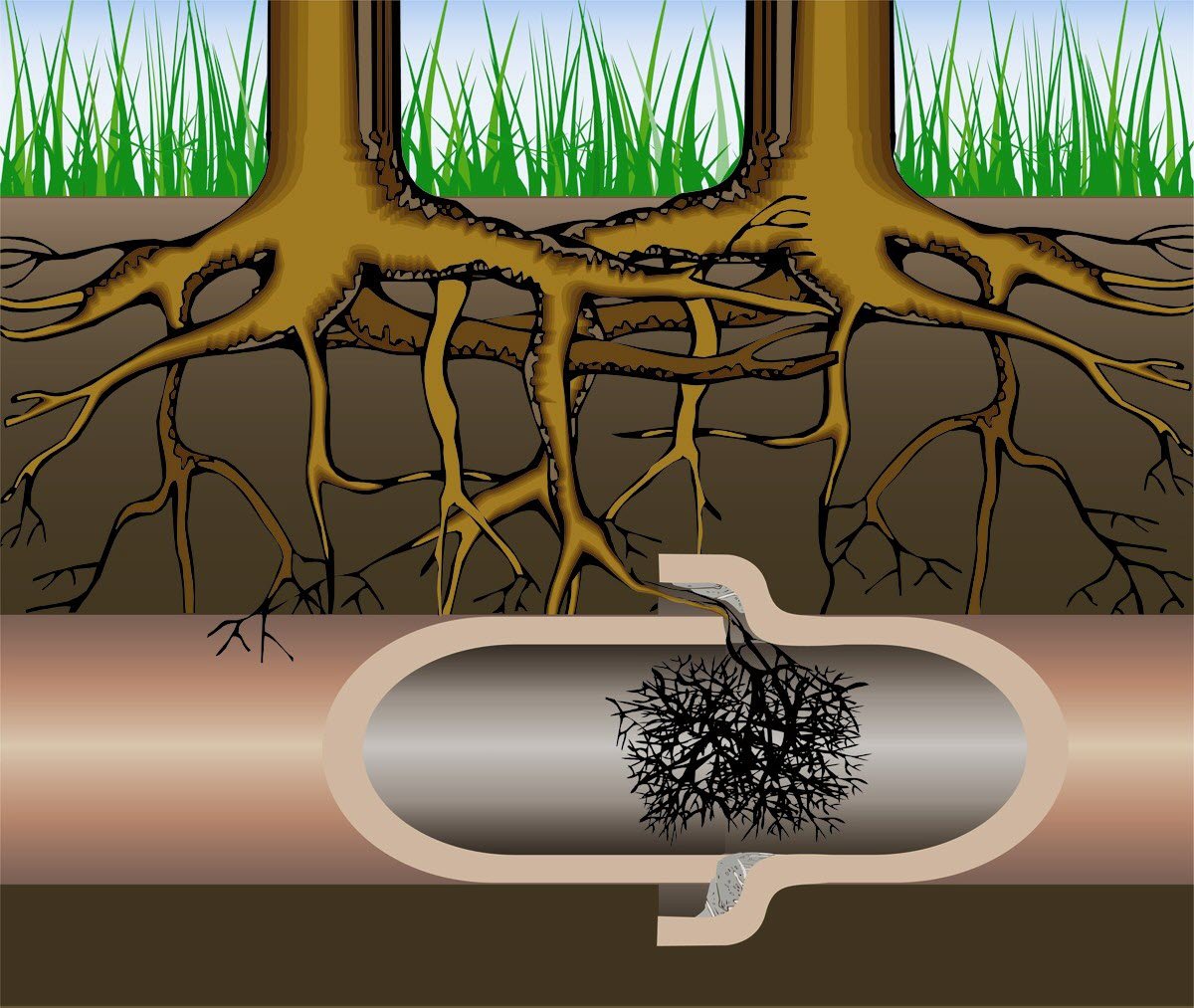
No-dig drain lining permanently seals root entry points without breaking up driveways, patios or gardens.
Traditional excavation (trench digging)
The conventional approach to a collapsed or root-damaged pipe is to dig it up and replace the damaged section. In open garden ground, this is relatively straightforward. In Blackpool’s terraced properties — where drain runs frequently pass beneath block-paved rear yards, concrete back alleys, or shared access passages — excavation becomes a major undertaking:
- Breaking up and removing paving or concrete surfaces.
- Excavating to pipe depth — often 1.5 to 2.5 metres in older properties.
- Shoring the excavation for structural safety and health compliance.
- Replacing the damaged pipe section manually before backfilling and reinstating the surface layers.
No-dig structural drain lining
Modern structural repair utilizes Cured-in-Place Pipe (CIPP) technology. Instead of digging a trench to expose the pipe, a resin-impregnated felt liner is inserted into the drain through an existing inspection chamber or manhole. Once positioned over the damage, an internal bladder inflates the liner against the old pipe walls, where it cures to form a brand new, smooth, seamless pipe inside the old one.
| Feature / Impact | No-Dig Drain Lining | Traditional Excavation |
|---|---|---|
| Average Project Duration | Hours (Typically 1 day) | Days (3-5 days average) |
| Surface Disruption | None — uses existing access points | High — destroys driveways/patios |
| Root Resistance | Excellent — seamless body eliminates joints | Moderate — new joints remain vulnerable |
| Overall Financial Cost | 60-70% lower average spend | High due to structural reinstatement |
Step-by-Step Guide: What to Do If You Suspect Root Ingress
If your property matches the warning signs outlined above, taking swift programmatic action prevents an inconvenient slow drain from evolving into an emergency structural collapse.
Document how often the line backs up. If clear-downs provide structural relief for less than a year, root masses are highly likely pulling debris down inside the run.
Walk the linear direction of your structural run. Look for cracking pavement or unusually green patches of grass situated within proximity to established boundary hedges or trees.
Run water sequentially through separate fixtures. If structural back-ups trigger globally across downstream ground-floor appliances, focus directly on the external sewer line.
Book a dedicated diagnostic evaluation. Certified operators spot precise root crowns, structural joint slips, and crack locations before recommending targeted non-invasive repair solutions.
Suspect Tree Roots inside Your Drains?
Don’t waste money on temporary fixes that let roots regrow. Get a clear structural picture with our local Blackpool CCTV drain survey and permanent no-dig repairs.
Book an Inspection Online 07903 021120