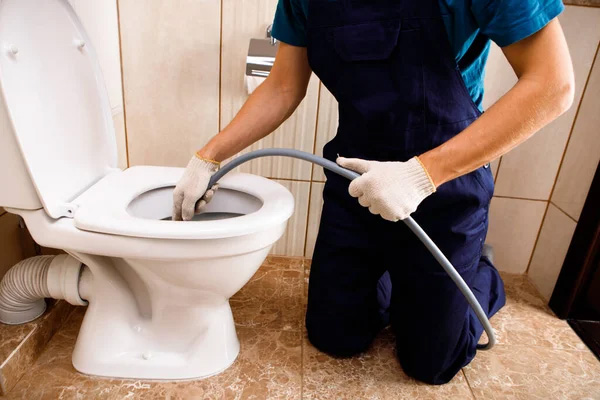

A kitchen sink that drains slowly is one of the most common drainage complaints we get across Blackpool and the Fylde Coast — and one of the most mishandled. Most people reach for a bottle of caustic drain cleaner, get a day or two of improvement, and then find themselves back at square one. Here’s why that happens, what the real problem usually is, and how to know when you need a specialist rather than another trip to the supermarket.
Recognising the Difference Between a P-Trap Blockage and Main Stack Issues
Not all slow sinks are the same problem — and the fix depends entirely on where the blockage actually is. Getting this wrong is the reason people spend weeks battling a sink that keeps blocking back up.
What is the P-trap and how does it block?
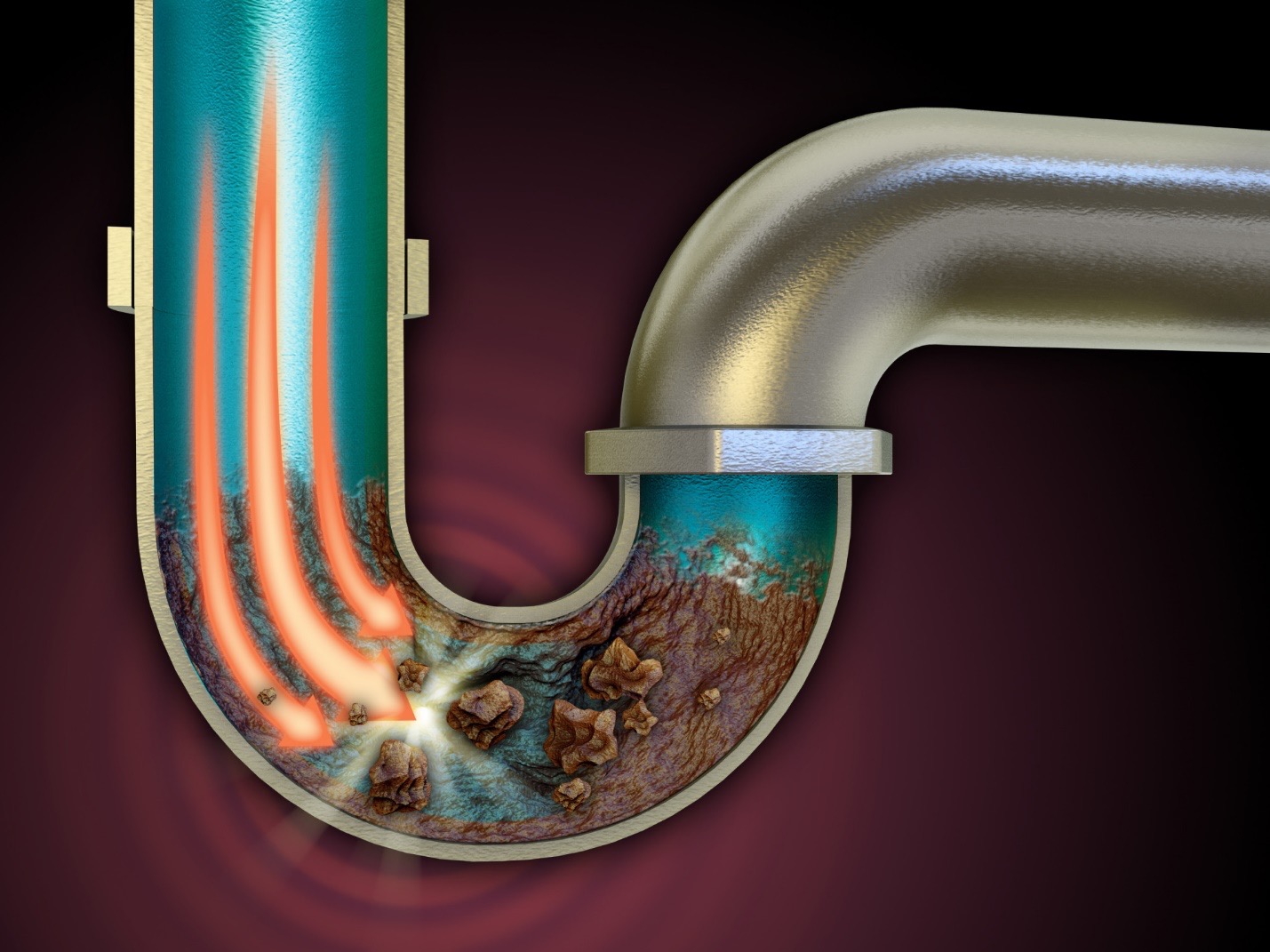
The P-trap is the U-shaped pipe section directly beneath your sink. It’s designed to hold a small pool of water that acts as a seal against sewer gases entering your home. It’s also the first place fat, food debris and soap scum collect. A P-trap blockage affects only your kitchen sink and nothing else — and it’s usually DIY-fixable.
Signs it’s a P-trap blockage:
- Only the kitchen sink is slow — all other fixtures drain normally
- Clearing the P-trap gives you days or weeks of normal flow before it slows again
- No gurgling sounds from other drains when the sink empties
- No backing up when the dishwasher or washing machine drains
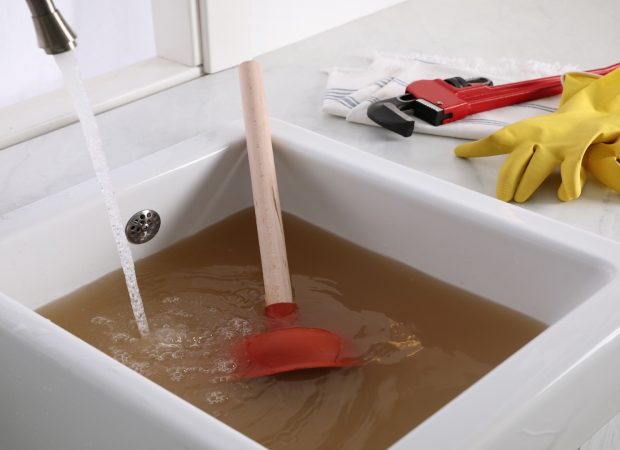
Fat, grease and food debris — the most common cause of slow kitchen drains on the Fylde Coast.
What is a main stack blockage and how is it different?
The main stack is the large vertical pipe that all your household waste fixtures — kitchen sink, dishwasher, washing machine, bathroom — feed into before joining the main sewer. A blockage here affects multiple fixtures simultaneously and is well beyond the reach of a plunger or the P-trap.
Signs it’s a main stack or main drain blockage:
- The kitchen sink backs up when the dishwasher or washing machine empties
- Other fixtures (bath, shower, toilet) are also draining slowly
- You hear gurgling from the toilet or other drains when the sink empties
- Clearing the P-trap has no effect on the drainage speed
- The blockage returns within days of clearing, no matter what you try
If any of those second-list symptoms apply to you, this is a professional job. No amount of DIY or chemical products will resolve a main stack blockage — and attempting it with the wrong approach can make things significantly worse. Our blocked sink service covers both scenarios with the right equipment for each.
| Situation | DIY fix? | Call a specialist? |
|---|---|---|
| Only the kitchen sink is slow | Try it first | If DIY fails |
| Clearing P-trap fixes it temporarily | Clear P-trap | Specialist for full jet |
| Sink backs up when dishwasher runs | No | Yes — stack blockage |
| Multiple fixtures draining slowly | No | Yes — main drain issue |
| Blockage keeps coming back | No | Yes — grease sleeve or structural |
| Older property with clay pipes | Avoid chemicals | Yes — pipe damage risk |
Why Rodding or Caustic Unblockers on Clay Pipes (Common in Fylde Coast) Is a Major Risk
This is where well-intentioned DIY can cross the line from unhelpful into actively damaging — and it’s something we see the consequences of regularly across Blackpool’s older housing stock.
The clay pipe problem
Much of the Fylde Coast’s residential drainage infrastructure — particularly in older terraced streets across FY1, FY2, FY3 and FY5 — still runs on original clay pipework. Unlike modern plastic pipe, clay is brittle, porous and prone to cracking. The joints between sections rely on mortar or lead seals that degrade over decades.
This matters enormously when it comes to DIY unblocking methods, because two of the most common approaches are genuinely dangerous on older clay systems.
Why caustic drain cleaners are a serious risk
The heat generated by the chemical reaction can cause hairline cracks to propagate in already-fragile clay pipe sections. More critically, the caustic solution attacks the mortar joint seals between pipe sections — dissolving them and creating gaps through which wastewater leaks into the surrounding soil. What started as a £150 drain clearance job becomes a pipe repair running into the thousands.
According to Water UK, chemical drain cleaners are also a significant source of environmental contamination when they leak into the ground around ageing pipework — an issue particularly relevant in areas like the Fylde Coast with its high water table.
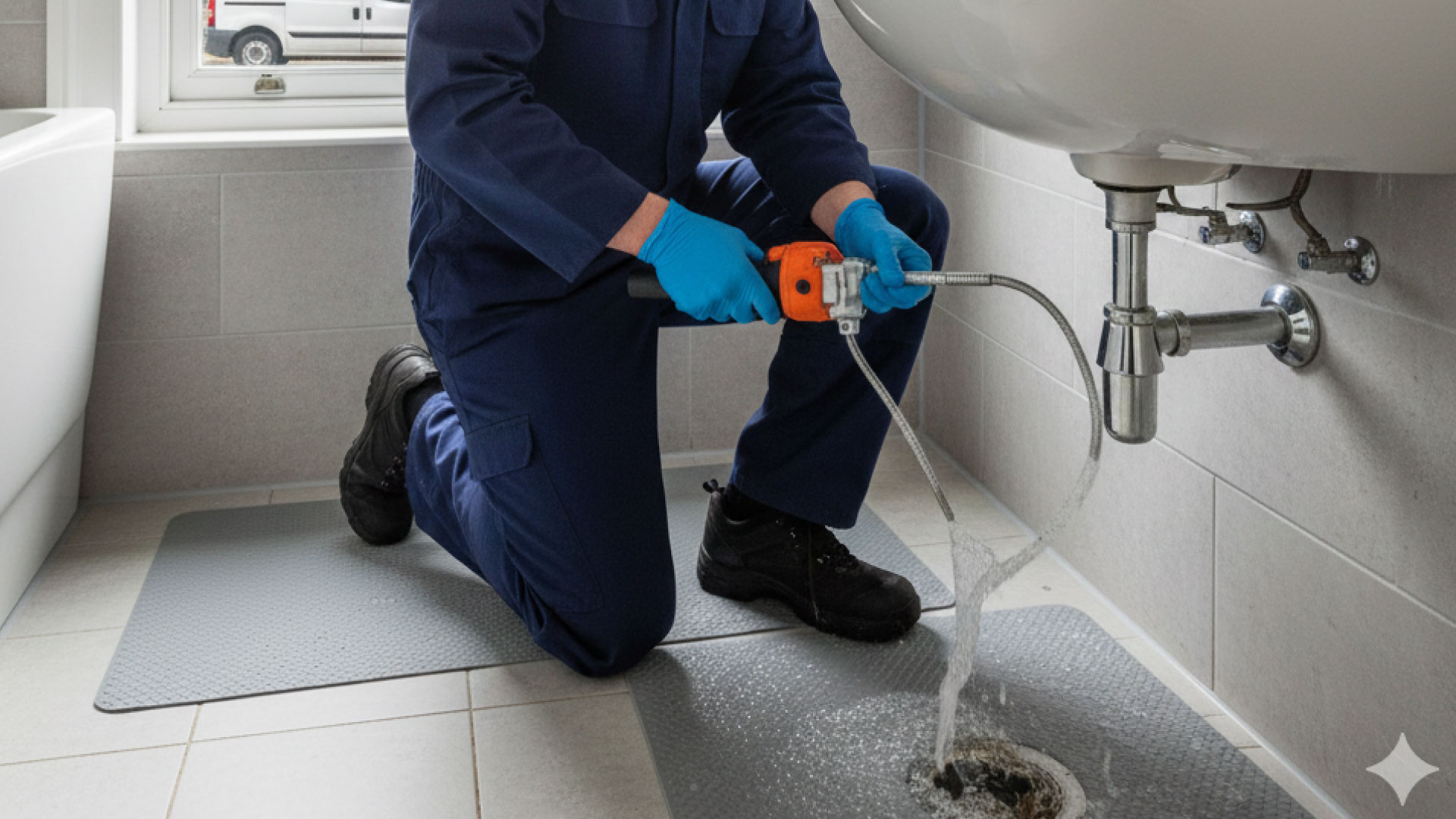
Clay pipe damage found during a CCTV survey — chemical cleaners and rodding can make existing cracks significantly worse.
Why rodding can make things worse
Drain rods — the flexible poles used to manually push through a blockage — have a similar problem. In clay pipes with fragile joints or existing hairline cracks, forcing rods through can dislodge pipe sections, cause joint failure or push debris into a partial collapse rather than clearing it. Rodding is also ineffective against a grease sleeve — it punches a hole through the middle of the blockage and gives the appearance of clearing it, but within days the fat reseals around the hole and the sink slows again.
If you’re in an older Blackpool or Fylde property and your kitchen sink is blocking repeatedly, the safest and most cost-effective approach is professional high-pressure jetting, which uses water pressure rather than chemicals or mechanical force. See our fat and grease removal service for more detail on how we handle kitchen drain blockages specifically.
Structural Validation: How We Guarantee the Pipe Is Cleared
The single biggest problem with most drain unblocking — whether DIY or from a cheaper service — is that there’s no way to know whether the pipe has actually been cleared, or whether a partial blockage remains that will reform within days. We solve that with structural validation as standard on every job.
Step 1 — High-pressure jetting to full clearance
We use professional high-pressure water jetting equipment operating at pressures far beyond anything available to consumers. The jetting head spins as it travels through the pipe, stripping the internal walls clean rather than just punching through the blockage. This removes the grease sleeve — the thin but significant coating of solidified fat that lines the inside of the pipe and causes recurring slow drainage.
Step 2 — Free CCTV validation survey
After jetting, we send a drain camera through the pipe to validate the clearance. The camera shows us — and you — the exact condition of the pipe on a live screen. This does two things: it confirms the pipe is genuinely clear rather than partially blocked, and it identifies any structural issues — cracks, root ingress, collapsed sections, misaligned joints — that would cause the sink to block again regardless of how well we’ve cleared it.
Every kitchen sink unblocking job includes a free CCTV validation survey — so you know the pipe is genuinely clear.
Step 3 — Structural repair if needed
If the CCTV survey reveals a structural issue, we can address it in the same visit or provide a clear, upfront quote for the repair work. Options include no-dig drain lining for cracked sections — a modern repair method that inserts a new pipe liner inside the existing pipe without excavation — or targeted drain repairs for more significant damage.
The Health & Safety Executive recommends that any drainage work on shared systems is carried out by qualified professionals — particularly important in Blackpool’s older terraced streets where individual property drains connect to shared runs.
Our guaranteed clearance process:
If you’re buying a property in Blackpool or the Fylde Coast and a kitchen sink is draining slowly during viewing, it’s worth requesting a homebuyer drain survey before exchange. A slow kitchen sink in a Victorian terrace can be the visible symptom of a much more significant drainage issue further down the line.
A homebuyer CCTV drain survey before exchange of contracts can uncover hidden drainage problems in older Blackpool properties.
Fighting a Recurring Kitchen Sink Blockage?
Our specialised local unblocking service covers all FY postcodes across Blackpool and the Fylde Coast. Fixed fee, no call-out charge, and every job includes a FREE CCTV Inspection to check for underlying structural damage — so you get a lasting result, not a temporary fix.
Get a Free Quote Blocked Sink Service 07903 021120 — Call NowBlackpool • Poulton • Lytham • Cleveleys • Fleetwood • All FY Postcodes