
In all my years working on drainage across Blackpool and the Fylde Coast, foul drain smells are probably the most frustrating problem for homeowners to deal with — not because they’re necessarily serious, but because they’re so routinely misdiagnosed. A plumber checks the traps, finds nothing obvious, suggests it might be the drains outside. A drainage company jets the drains, finds no blockage, suggests it might be something inside. Meanwhile the smell persists and the cause is a hairline crack in a waste pipe behind a wall that neither approach was ever going to find.
This is the post I wish existed every time I’ve attended a Blackpool property where someone has already had three contractors out and still can’t get rid of the smell. Here’s how to actually diagnose where a foul drain smell is coming from — and why specialist CCTV and smoke testing is the only approach that reliably finds the sources that everything else misses.
Why Drain Smells Are So Often Misdiagnosed
Sewer gas follows the path of least resistance. It doesn’t respect the tidy boundaries between plumbing and drainage work, or between internal waste pipes and underground drain runs. A gas source in the underground drain can produce a smell that seems to come from inside a bathroom. A hairline crack behind a bathroom wall can produce a smell that’s strongest in the garden. Without the right diagnostic tools, finding the actual source is genuinely difficult.
The reason smells get misdiagnosed so often comes down to three things. First, most contractors investigate only their own domain — a plumber looks at internal plumbing, a drainage company looks at the underground drain system, and neither looks at the full picture. Second, the most common diagnostic approach — a visual inspection — simply cannot detect hairline cracks and micro-fractures that are the primary structural cause of gas escape in older properties. Third, some smells are intermittent — worse in hot weather, after heavy rain or at specific times of day — which makes them hard to track without specialist detection equipment.
The common sources — and how difficult each one is to find
An infrequently used fixture whose water seal has evaporated. Resolved immediately by running water into the trap. Check every sink, bath, shower tray and floor gully — including those in spare rooms and outbuildings.
The rubber seal between the toilet pan and the soil pipe deteriorates over time, allowing gas to escape at floor level. Visible as a crack, movement in the pan, or discolouration around the base. Replacement is a standard repair.
A backed-up inspection chamber in the garden produces a persistent external smell. Visible on inspection, cleared by jetting. Responsibility depends on whether it serves a private or shared drain.
Every drain system should have a vent pipe to allow air in and sewer gas out above roof level. A blocked, undersized or incorrectly installed vent pushes gas back down into the property through fixture traps — particularly noticeable when a toilet is flushed. Identifiable on CCTV and smoke testing.
A micro-fracture in a clay or plastic pipe — too small to see visually but large enough to allow constant gas escape. Particularly common in Blackpool’s older FY1–FY4 Victorian clay pipe systems. Requires smoke testing to locate reliably; CCTV alone frequently misses hairline cracks.
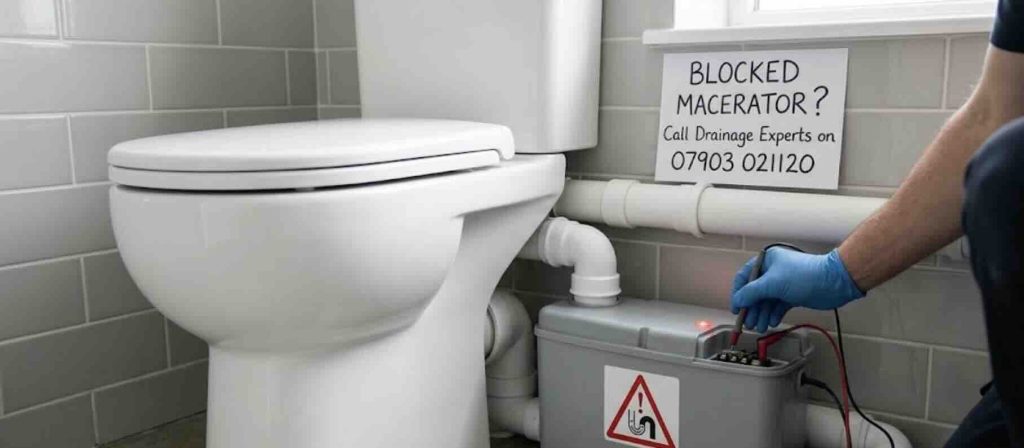
In older Blackpool properties, cast iron and early plastic waste pipes run concealed in wall cavities and under floor boards. Hairline cracks in these pipes allow gas to permeate through floor and wall materials before being detected in the room. Smoke testing with pressure is the only reliable detection method.
A joint that has separated — from ground movement, root pressure or age — creates a continuous gas escape point in the underground run. May not cause blockage, so jetting finds nothing. CCTV identifies the displaced joint; smoke testing confirms it as a gas source.
Cracked and deteriorated pipe sections in Blackpool’s older drain systems are the most common structural cause of persistent sewer gas smells.
Why Old Clay Pipes in Blackpool’s FY Postcodes Are the Highest-Risk
Having spent years working on drainage across FY1, FY2, FY3 and FY4, I can tell you that the age and material of Blackpool’s dominant housing stock makes sewer gas issues significantly more common here than in areas with newer drainage infrastructure.
Victorian clay pipes are inherently more susceptible to the kind of micro-fractures and joint failures that cause gas escape than modern plastic pipework. They develop hairline cracks under the accumulated stresses of ground movement, frost heave, vehicle loading on rear alleys and root pressure over 100-plus years. These cracks are often too small to cause a blockage — water still passes through — but large enough to allow a constant trickle of sewer gas to escape into the surrounding soil and eventually into the property.
The mortar joint seals between clay pipe sections are equally vulnerable. Mortar that was sound in 1900 has had 125 years of thermal cycling, root pressure and chemical exposure. Even where the joint hasn’t visibly displaced, the seal may have deteriorated to the point where gas passes through freely. This is the scenario that a camera inspection most frequently misses — the joint looks intact from the inside, but it isn’t gas-tight.
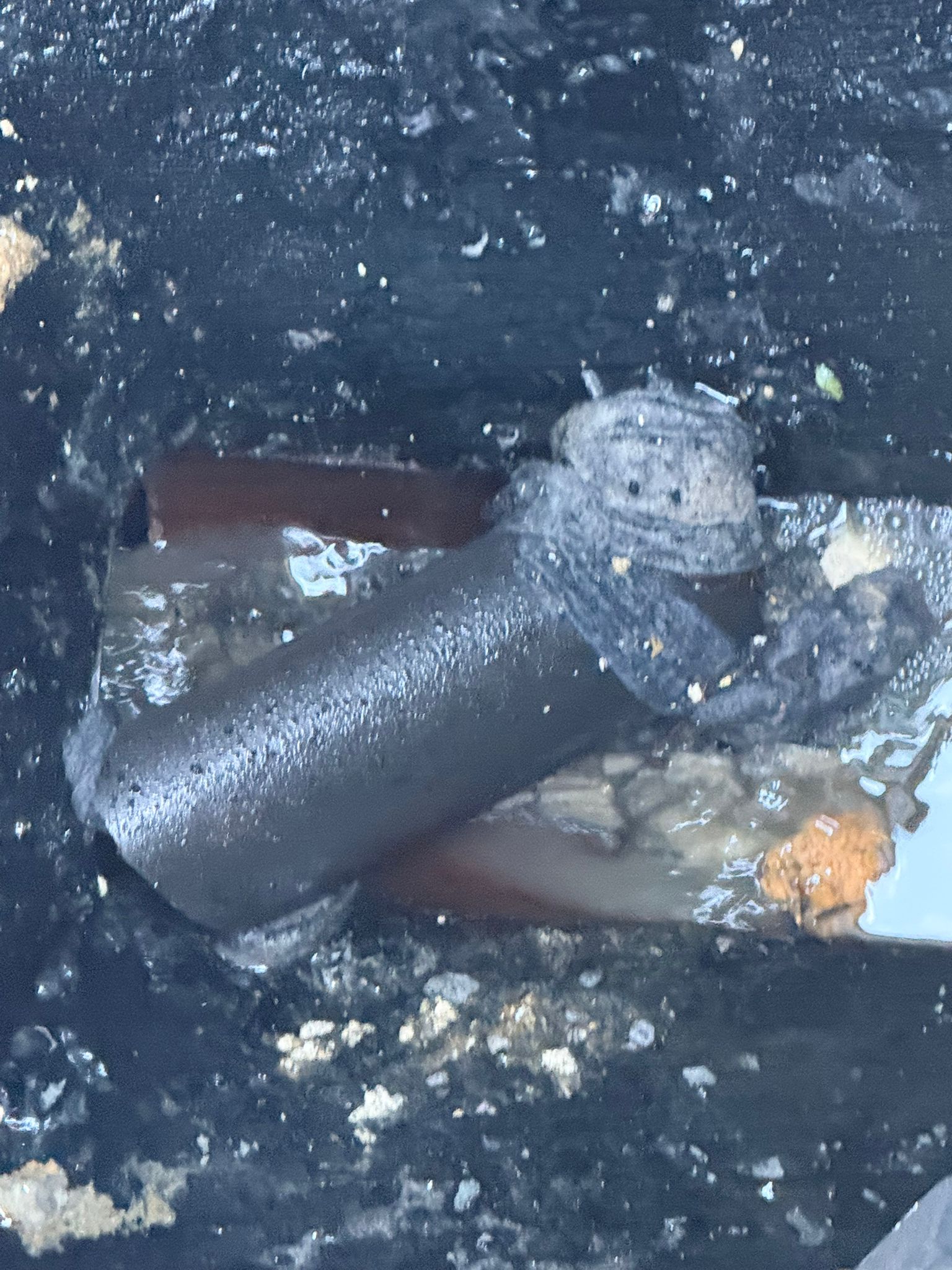
Victorian clay pipework across FY1–FY4 — hairline fractures and deteriorated mortar joints are the primary source of sewer gas escape in Blackpool’s older properties.
The sewer gas health picture — what you need to know
Sewer gas is a mixture of gases — primarily hydrogen sulphide, methane, ammonia and carbon dioxide — produced by the decomposition of organic waste in the drain and sewer system. At the low concentrations typical of a domestic drain smell, the primary effect is the unpleasantness of the smell itself rather than a direct health hazard.
At higher concentrations in enclosed spaces — particularly in properties where a significant structural breach is allowing continuous gas entry — the picture changes. The Health and Safety Executive classifies hydrogen sulphide as a serious occupational hazard at elevated concentrations. For domestic exposure, symptoms including persistent headaches, nausea and eye irritation in occupants — particularly in ground floor rooms — should be taken as a signal that gas concentrations may be elevated and specialist investigation is warranted promptly rather than monitored.
CCTV and Smoke Validation: How We Find What Others Miss
The diagnostic approach that actually works for persistent foul drain smells combines two complementary techniques — CCTV camera inspection and smoke testing. Used together, they cover the full range of failure types that cause sewer gas escape, including the hairline fractures and deteriorated joint seals that each method alone can miss.
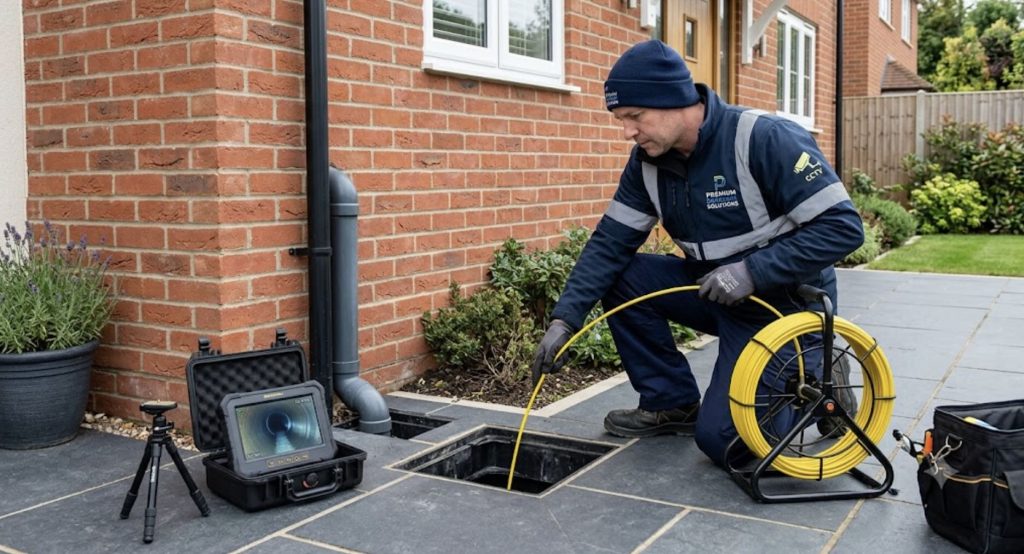
The pan-and-tilt camera passes through the full drain run, identifying structural defects visible to the camera — displaced joints, cracks wider than approximately 1mm, root ingress, collapsed sections and build-up.
- Finds: displaced joints, larger cracks, root ingress, collapses
- Misses: hairline micro-fractures, deteriorated mortar seals, concealed waste pipe failures
- Best for: identifying blockage sources and significant structural defects
Non-toxic white smoke is introduced into the drain system under controlled pressure. Any breach in the system — including hairline cracks and deteriorated seals invisible to camera — is revealed by smoke exiting at the failure point.
- Finds: hairline cracks, failed mortar seals, open joints, concealed pipe failures, vent defects
- Misses: non-gas-permeable blockages (irrelevant for smell diagnosis)
- Best for: locating precise gas escape points including those missed by CCTV
The smoke test is particularly effective for Blackpool’s older clay pipe systems because it reveals the deteriorated mortar joint seals that represent the most common structural gas escape point in these systems — and the ones that CCTV most reliably passes over. The smoke exits precisely at the failure point, making the location unambiguous and the repair scope clear before any work is committed to.
CCTV and smoke testing used together — covering the full range of failure types that cause sewer gas escape in Blackpool’s older drain systems.
Our smell diagnosis process from first visit to repair
Sewer Gas in Commercial Properties — A Different Risk Profile
For commercial premises in Blackpool — restaurants, hotels, care homes, retail units — sewer gas presents a risk profile that goes beyond mere unpleasantness. A persistent drain smell in a food business is a direct food hygiene concern that will be flagged in a Food Hygiene Rating inspection. In a hotel, guest complaints about drain smells represent both a reputation risk and a potential environmental health trigger. In a care home, elevated gas concentrations in enclosed living spaces have direct health implications for vulnerable residents.
Kitchen drain smells and food hygiene ratings are directly linked. Grease trap failures and cracked kitchen drain runs are the most common commercial sources. Annual CCTV survey recommended.
Multi-floor drain systems with multiple potential gas ingress points. Bathroom drain smells in guest rooms are a TripAdvisor risk. Smoke testing maps the full picture across complex converted Victorian building layouts.
CQC inspections flag drain odours as a hygiene concern. Vulnerable residents in enclosed spaces face elevated risk from prolonged gas exposure. Proactive six-monthly inspection recommended.
Staff welfare and workplace regulations require maintained sanitation. A persistent drain smell in a workplace is a reportable condition under HSE guidance on occupational health standards.
For commercial premises, our commercial drain survey service includes gas escape assessment as part of the structural inspection — providing the documented compliance evidence that environmental health officers, CQC inspectors and food hygiene assessors require.
Persistent Drain Smell in Your Blackpool Property?
Smells are routinely misdiagnosed because most contractors only look in their own domain. We use specialist CCTV and smoke validation across the complete drain system — finding hairline pipe failures and deteriorated joint seals that standard inspection misses entirely. Covering all FY postcodes and Lancashire.
Book a Smell Diagnosis CCTV Drain Surveys 07739 961430 — Blackpool & LancashireAll FY Postcodes • Residential & Commercial • CCTV + Smoke Testing • Written Report Included